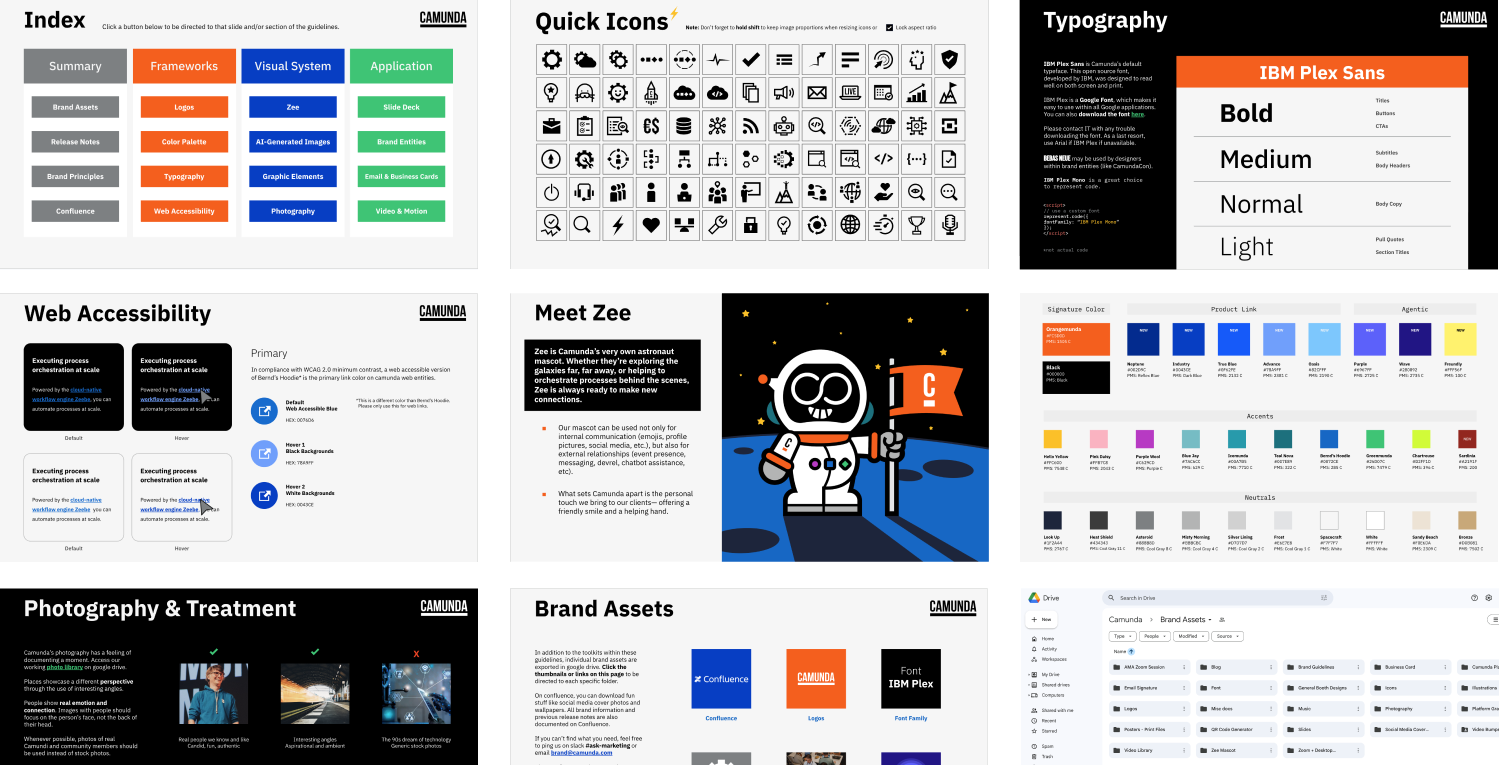
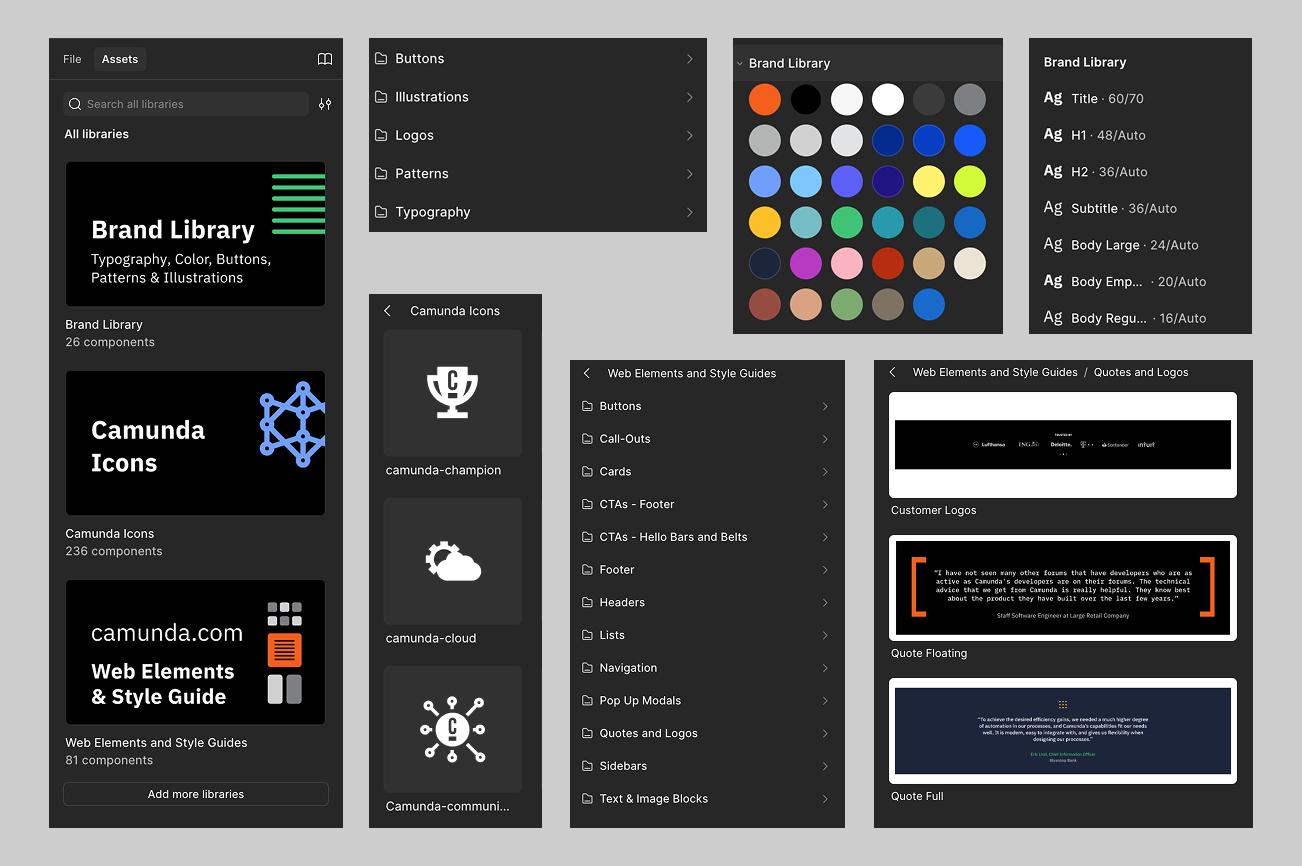
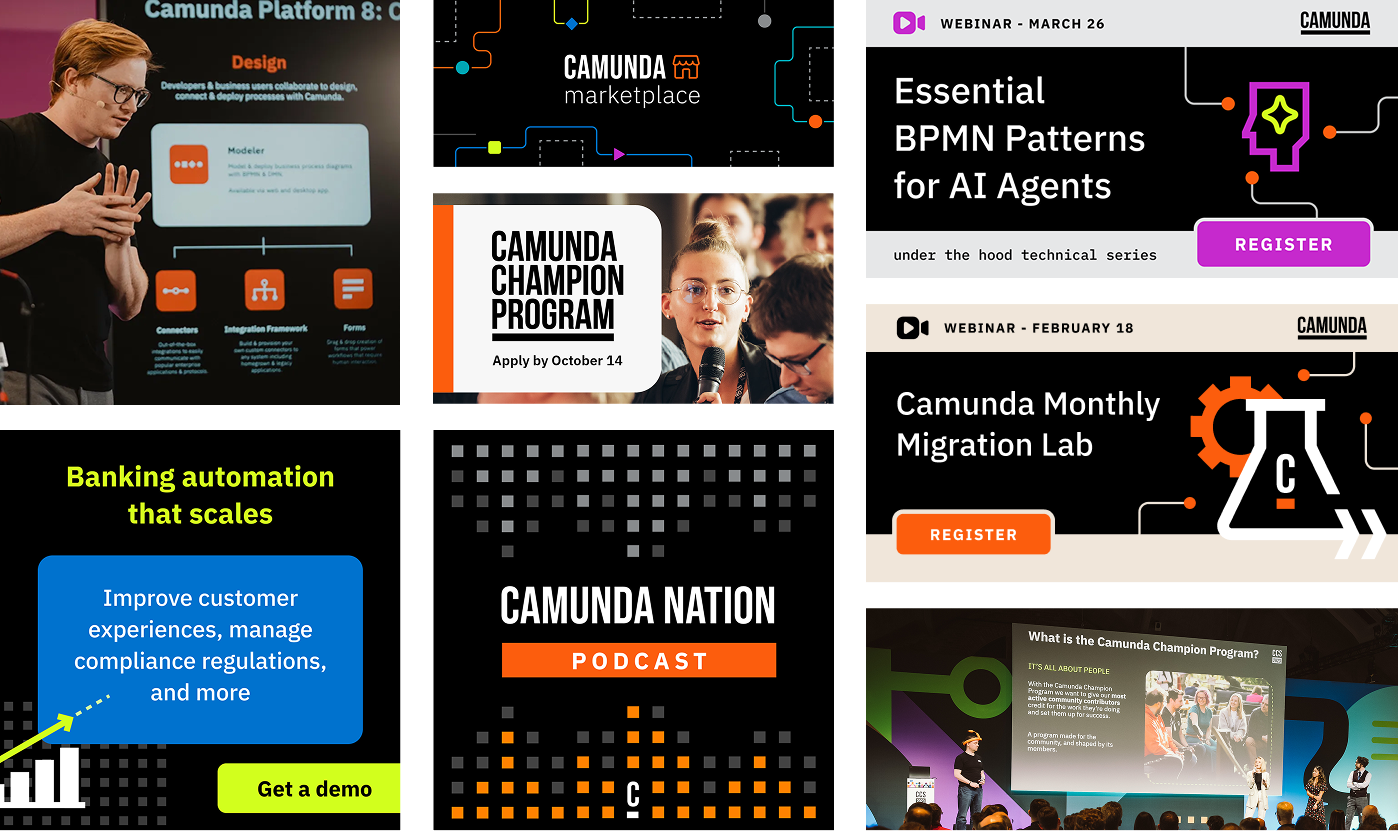
How it evolved
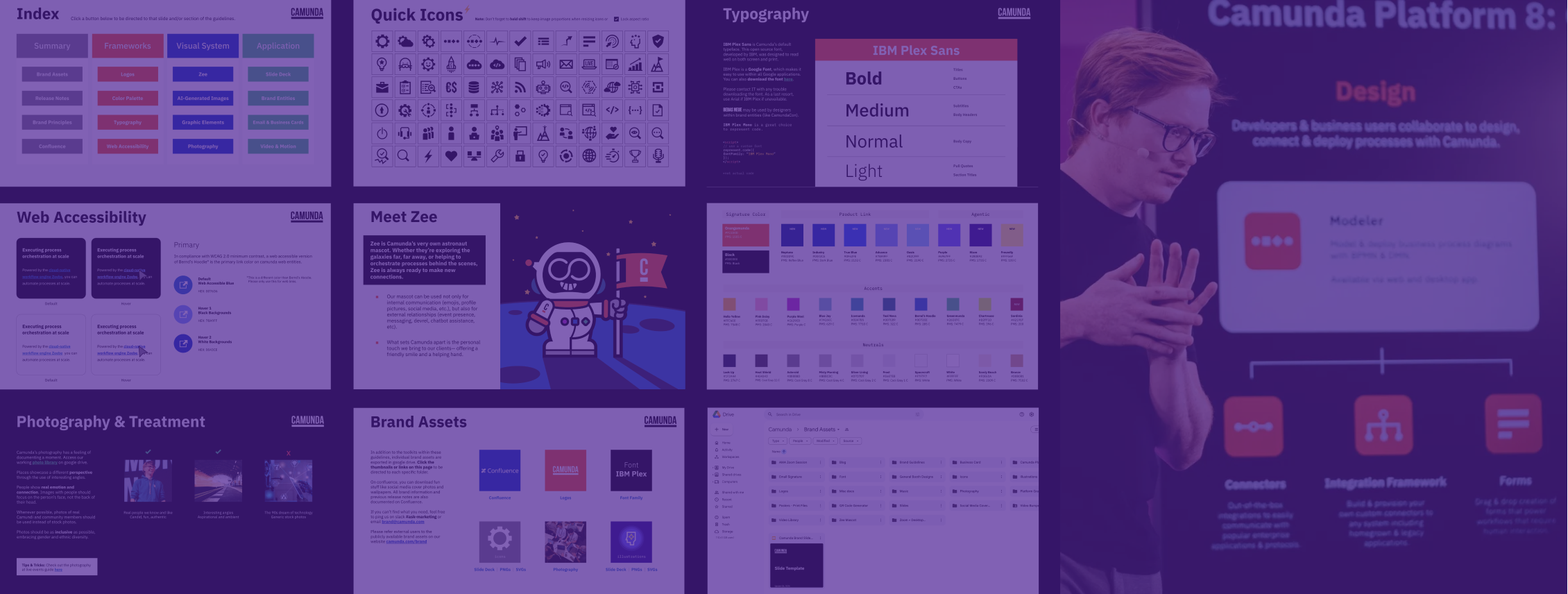
The system was never meant to be static. I established an annual brand audit rhythm with the creative team and used CamundaCon as a testing ground for new creative directions. The strongest experiments from the event got evaluated and, if they held, folded into the core system. The brand stayed current without losing its foundation.
When I noticed the slide template had gaps, I did not guess at the fix. I ran a structured feedback survey across departments and seniority levels, including the co-founder. That input shaped the v3.3 release directly: better functionality, an expanded palette, refinements driven by real usage instead of designer assumptions.
Five versions over four years. Each one a response to how the brand was actually being used. The system evolved while the foundation held.
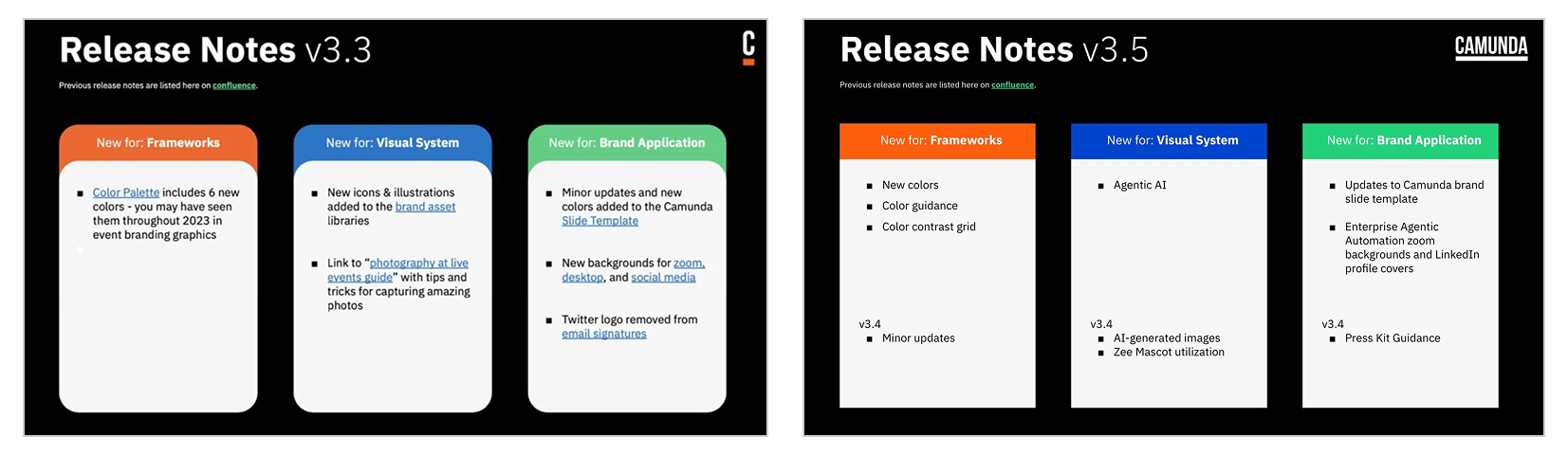
Brand Guidelines release notes, v3.3 to v3.5: Five versions released over four years, each one a response to how the brand was actually being used. The system evolved while the foundation held.
Outcome
Employees
enabled to use the brand independently across the entire org including marketing, sales, and senior leadership
Brand Impact Score growth
37 in Q1 2022 to 57 in Q1 2025 tracked externally by Insight Partners
Versions
of the guidelines shipped over 4 years, each driven by audit and feedback
YoY total social engagement
in year one, despite a platform-wide impressions decline during Twitter's 2022 instability
YoY video views
across LinkedIn, Twitter, and Facebook. YouTube likes more than doubled; highest video output
The brand system was launched in February 2022, which happened to be Camunda's most complex brand year. With a new product launch (Camunda 8), the first hybrid CamundaCon, a GTM pivot to PLG and SLG motions, and the start of a new market category, the brand system held through all of it, and kept scaling from there.
The brand wasn't broken when I got there. It just couldn't leave the room without me. Now it does, every day, in 600+ pairs of hands.
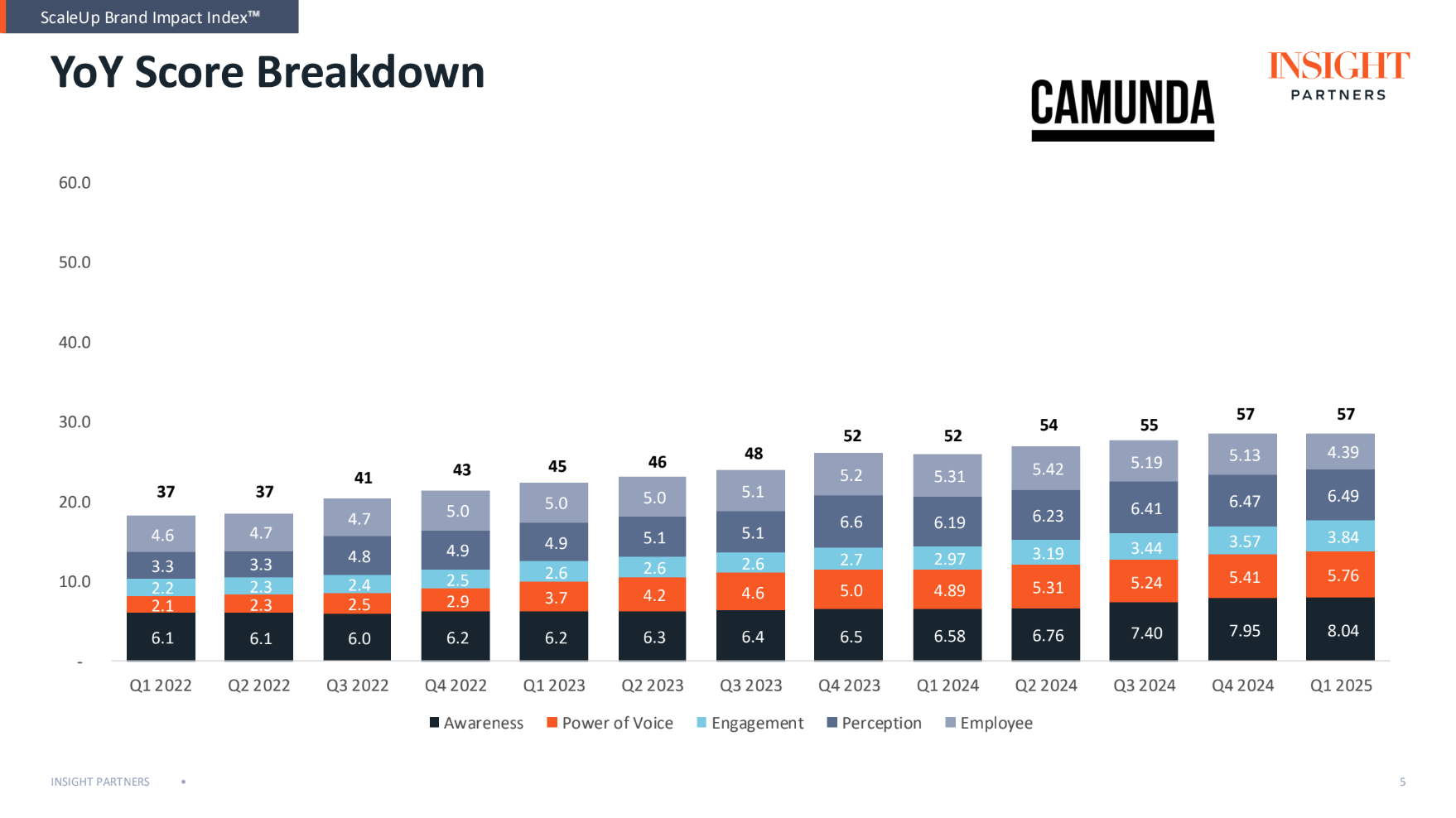
Brand Impact Score, Q1 2022 to Q1 2025. Tracked externally by Insight Partners across awareness, engagement, perception, power of voice, and employee sentiment. Every dimension up, every year.
Teaching the org to think in brand
By 2026 the highest-leverage work had changed shape. It was no longer about making the brand. It was about getting the whole org aligned on what it means.
At the marketing offsite in Iceland, April 2026, I built and led "Brand in 3 Layers," a workshop disguised as an icebreaker. Teams of three to five had to define what brand is, describe how Camunda shows up today, and sketch it. The warm-up framing was deliberate. Underneath it, the exercise was discovery: it surfaced how differently people across marketing understood the same brand, in their own words, before anyone had a chance to defend a position.
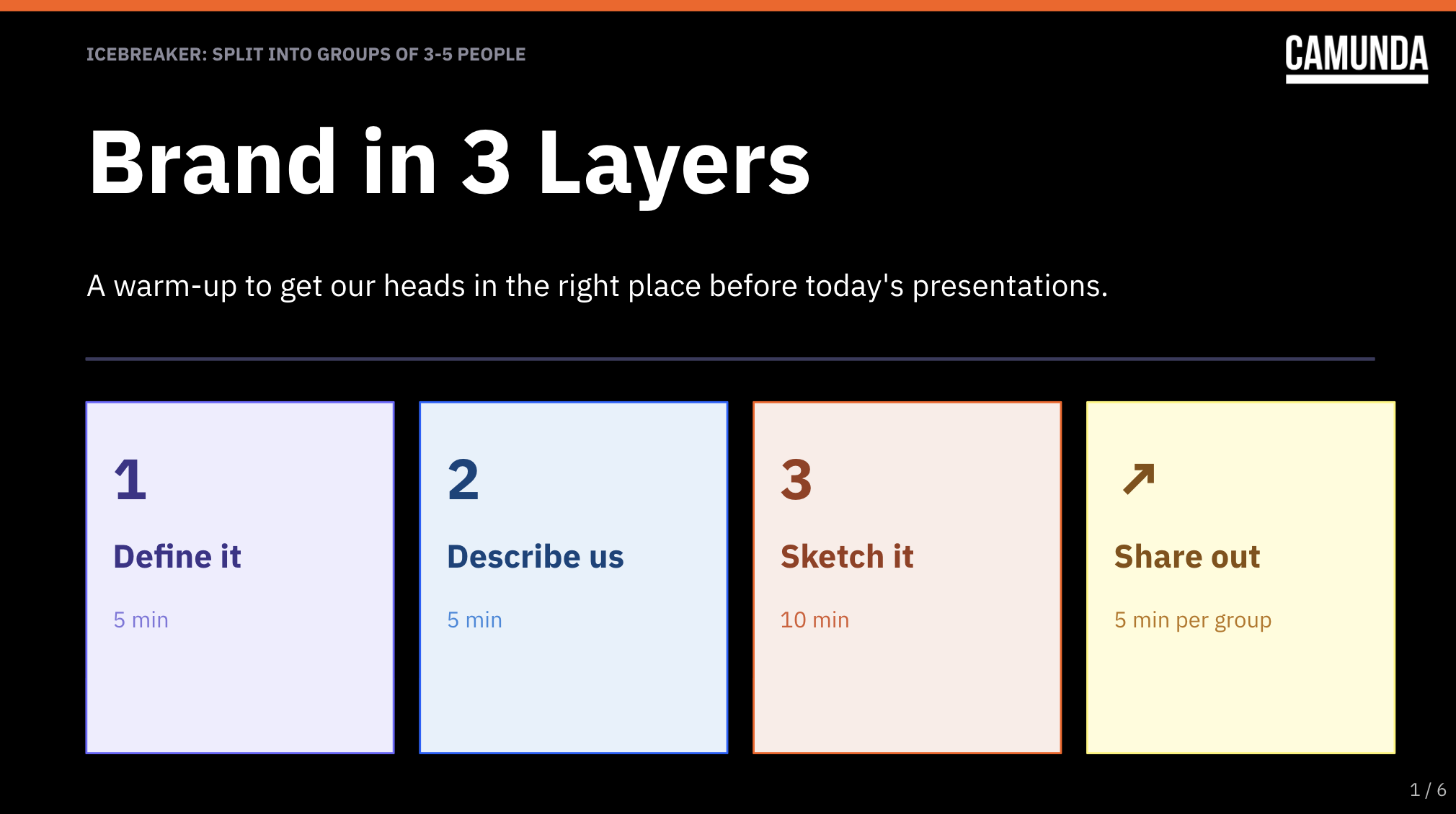
The workshop structure I built and led at the marketing offsite. Brand in 3 Layers: define it, describe us, sketch it, share out. A warm-up on the surface, a brand alignment diagnostic underneath.
The premise I opened with: if the people who run marketing can't agree on what the Camunda brand means, we can't expect prospects to. Internal alignment is the precondition for external clarity, not a nice-to-have after the fact.
It was rated one of the top 5 sessions of the offsite. The rating was the easy part to point at. What mattered more: the output became real input for the brand evolution, and a room full of non-designers left thinking about brand as something they own a piece of.
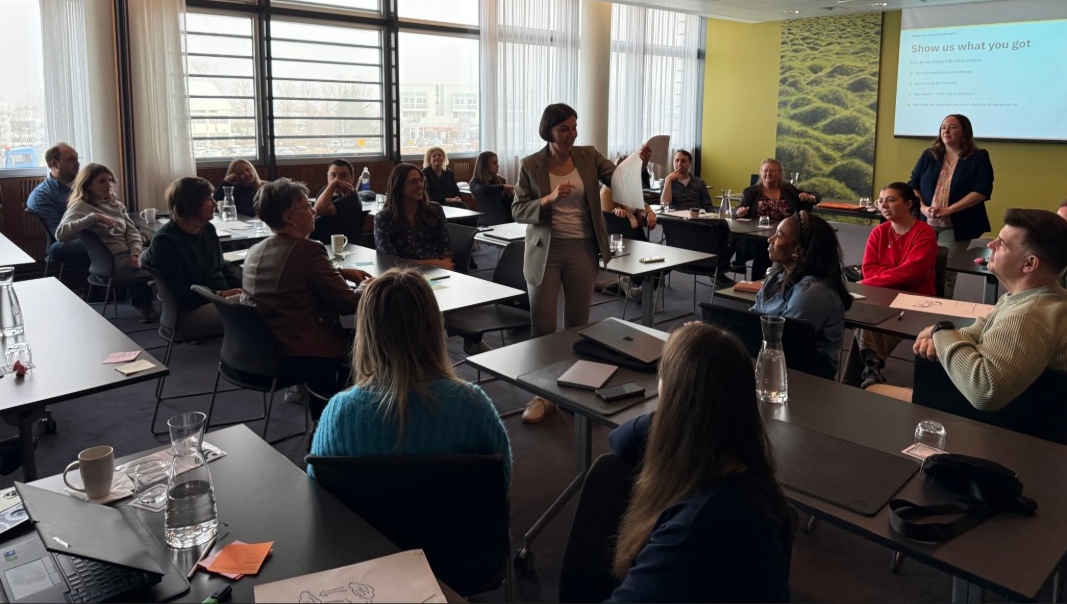
The share-out in progress: surfacing how differently one brand reads across the org, before anyone defended a position.
Directing the brand's next chapter
The workshop fed something bigger. I am currently leading Camunda's brand evolution with the external agency Baunfire, the most senior brand mandate I have held. At the same offsite, I presented the initiative to the marketing team, making the case for why a rebrand matters now and what is at stake if we get the foundation wrong.
My role is direction, not production. I manage the agency relationship, steer the work through discovery and strategy, and shape decisions alongside a cross-functional tiger team, the marketing leadership team, and the CMO. The "Brand in 3 Layers" output went straight into that discovery, so the rebrand started from how the org understands the brand rather than from a blank brief.
This is the role arc closing its loop. I started as the designer applying the brand. Five years on, I am the person directing where it goes next, with executive leadership in the room and an agency executing to my direction.