When the creative team became the ops team
Nobody asked me to fix this. I started because I needed to understand my own team's work, and once I had the data I couldn't unsee what it was telling me.
Camunda's marketing org was growing fast and the cracks were showing. Nine squads working in their own corners of Slack, Asana, and Google Suite. No shared visibility into what anyone else was doing or what was coming. Long-form content touched every team and lived in nobody's system. Events created workload spikes nobody could predict. In the middle of it, the creative team, two designers, absorbed all of it.
The data confirmed what the team already felt: burnout was real, deadlines slipped, quality was at risk.
The Real Problem
Every squad had a process. Nobody had a system. The result was a marketing team that was busy but not coordinated.
I had the tools, the access, and the organizational instinct. So I built the system that should have existed.
One thing to be clear about up front: this was never about closing more tickets. It was about protecting the team's attention for the work that moves the brand. Capacity is a creative-quality problem before it is an ops problem.
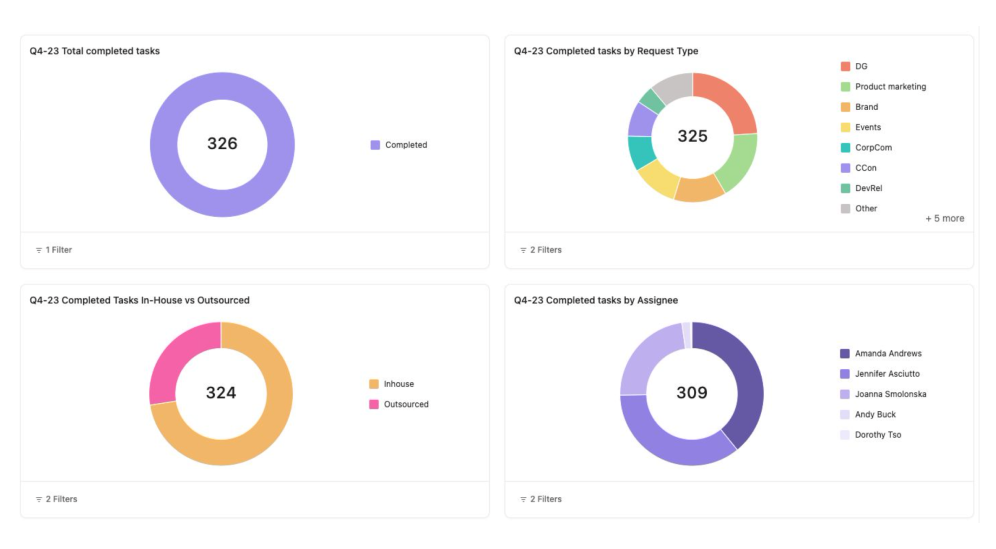
Asana reporting dashboard generated with a tagging system within the Creative board.
Three Initiatives, One Through-Line
Each initiative was built on the last, moving from insight to capacity to scalable process.
Initiative 1: Visibility through data
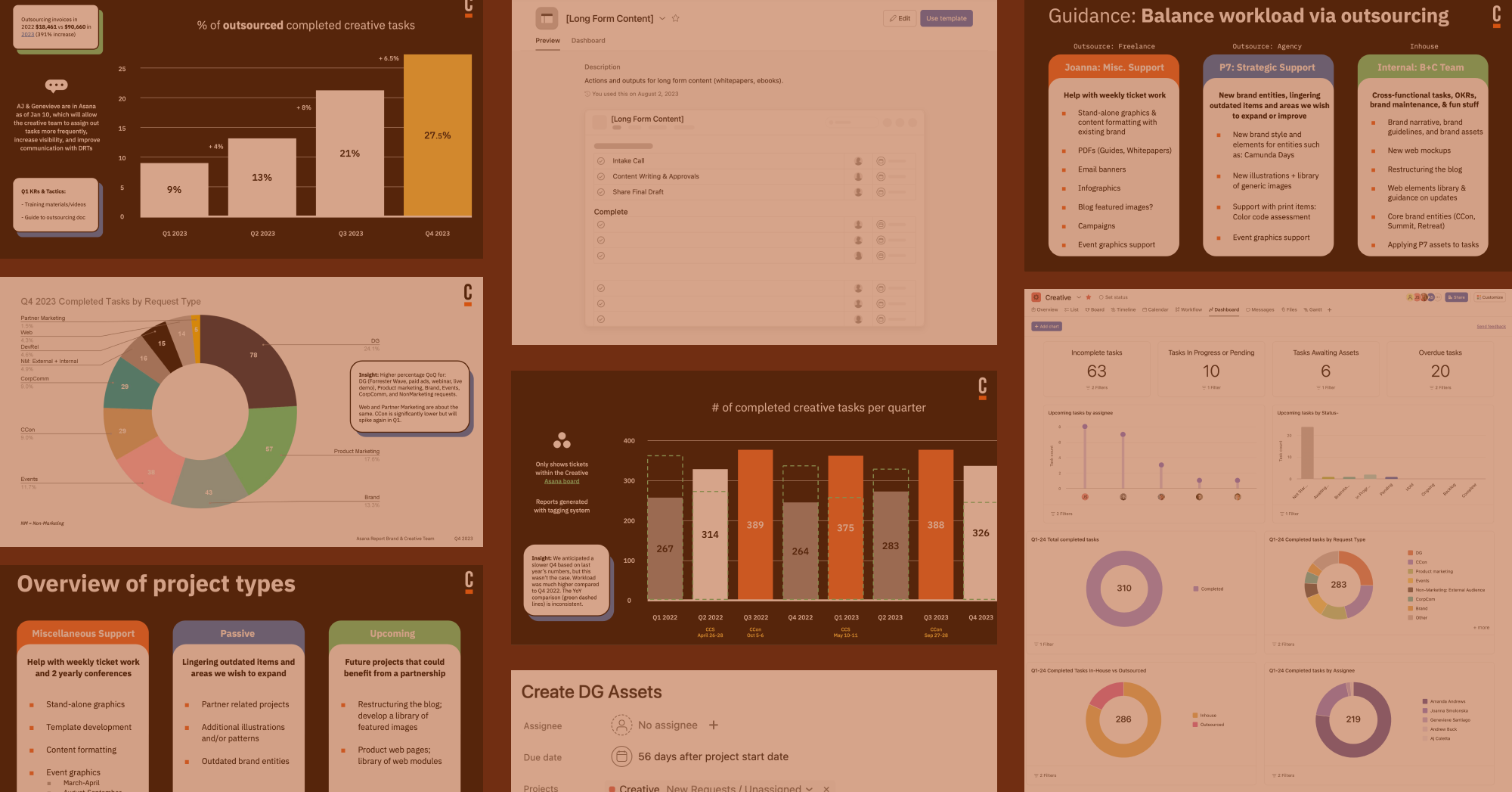
I turned the creative team's Asana board into a decision-making tool. A tagging system across every task unlocked Asana's reporting dashboard, which I configured to chart the work by category. For eight consecutive quarters, two full years, I tracked, compiled, and presented the metrics.
The data answered questions the team had never been able to ask. The clearest finding: workload reliably spiked in the quarters before CamundaCon and Camunda Community Summit, peaking near 388 completed tasks in Q3 2023. Predictability became a planning tool. We could see the spike coming instead of getting buried by it.
That trend data did something advocacy never could: it persuaded the CEO to approve a new headcount for the creative team. Data made the case that arguing could not.
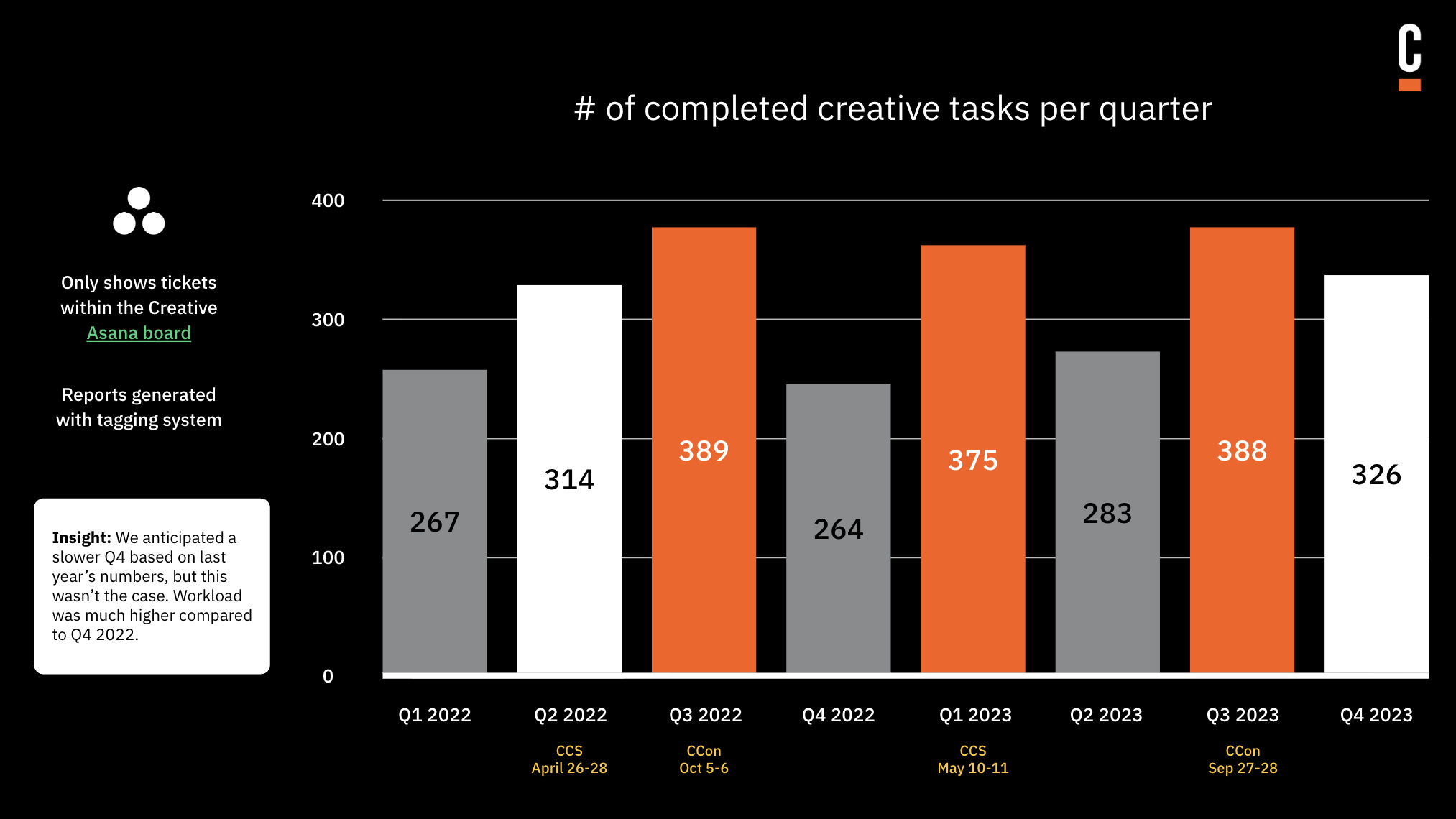
Asana reporting: Eight quarters of creative team performance data. Trend analysis revealed predictable workload spikes tied to the event calendar.
quarters of continuous reporting in Asana
CEO-approved headcount for the creative team
Initiative 2: Extending capacity
The data confirmed the capacity problem. I built the solution: a vetted network of freelancers and a design agency, onboarded with the same intentionality as a new hire. I wrote an internal workflow guide for the team and an external "Working with Camunda" guide for freelancers, covering brand assets, invoicing, tools, and communication norms. Everything ran through shared Asana, Figma, and Google Drive for full visibility.
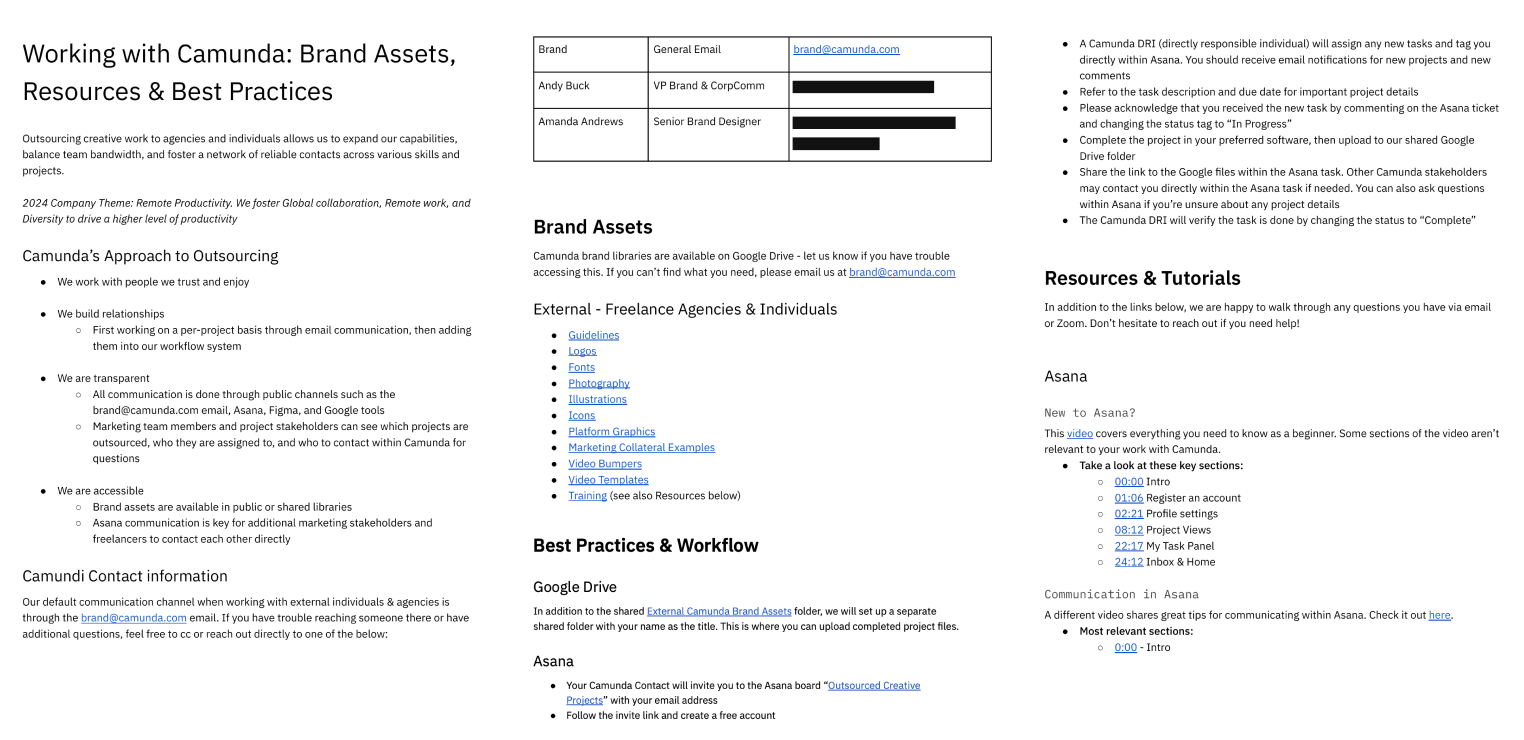
The "Working with Camunda" guide: the doc that turned ad-hoc freelancers into a managed network. Brand access, invoicing, tools, and communication norms in one place, so onboarding a freelancer worked like onboarding a hire.
Outsourced creative work grew from 9% to 27.5% in a single year. Spend went from $18,461 to $90,660, a 391% increase that turned into output a two-person team could never have absorbed. In 2024, the agency Project7 Design took on the company retreat and the illustration library expansion, which freed the team to focus on the biggest CamundaCon in company history.
That is the whole point of the system, said plainly: it existed so the creative could get better. And it did. CamundaCon Amsterdam 2025 became the highest-attended, best-performing event Camunda has ever run. The ops work bought the team the room to make it.
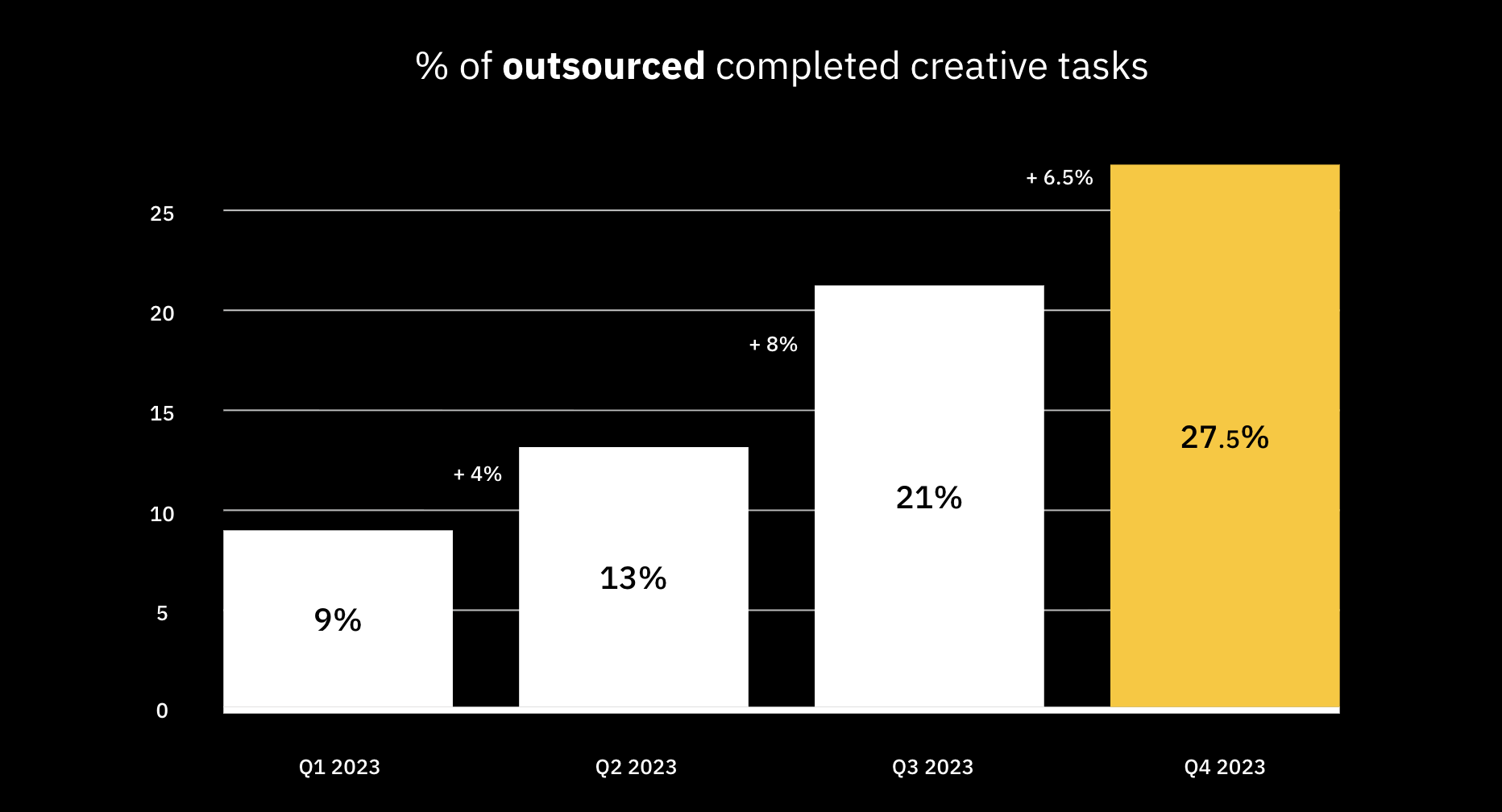
Outsourced creative work increased in one year, enabled by a structured onboarding process, shared workspaces in Asana, Figma, and Google Drive, and a 'Working with Camunda' guide for external collaborators.
increase in outsourced tasks from Q1 to Q4, 2023
increase in outsourcing investment
"The whole process has been a walk in the park, thanks to Amanda and the system she created. Everything from being onboarded, to being assigned new projects, turning in projects and receiving feedback, everything has been smooth, easy to follow and understand. You know a system works when you don't realize you're following a system, and that's exactly how this has been." – Jared, Video Editor, Motion Graphics Designer & Content Creator, Freelance
Initiative 3: Standardizing cross-functional work
Long-form content was the most consistently broken workflow in marketing. Every report or whitepaper needed nine squads to collaborate in sequence, but each team only learned about it when a ticket hit their queue, too late to plan. The result was scattered communication, missed handoffs, and an end-of-quarter scramble every time.
I interviewed stakeholders across every affected squad and mapped the full task list from brief to publish. From that I built an Asana project template with tasks, owners, tags, and links to every team's board. One click generates and distributes the work to all nine squads at once, with forecasting built in and everything visible from a single board.
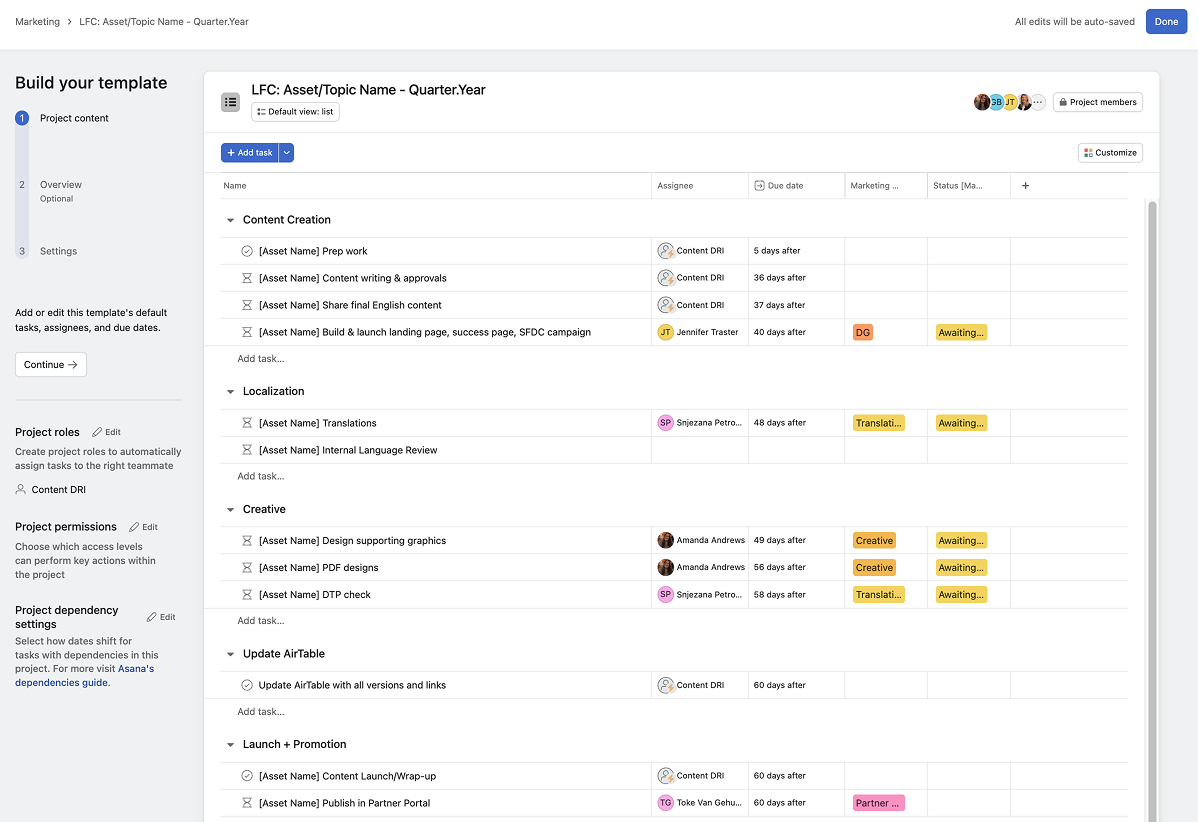
Asana project template for long-form content: One click generates and distributes tasks to all nine marketing squads simultaneously, with forecasting and full visibility from a single project board.
This is the part I am proudest of, and it is not the template. It is that I got nine squads to change how they work. I led an org-wide behavior change, not a tool rollout.
Marketing Efficiency Giant, GTM Summit 2024
company-wide as the Camunda standard
Who I brought along
Adoption was the real work. This touched nine squads, senior leadership, and the CEO, and getting each one on board meant speaking their language. I showed demand gen how it killed last-minute requests. I showed localization how they finally got early notice on translation tasks. I showed leadership how it connected to pipeline planning and team health.
Brand & Creative · Product Marketing · Web · Demand Generation · SEO · Localization · Social · Corporate Communications · Senior Leadership · CEO · Freelancers & Agencies
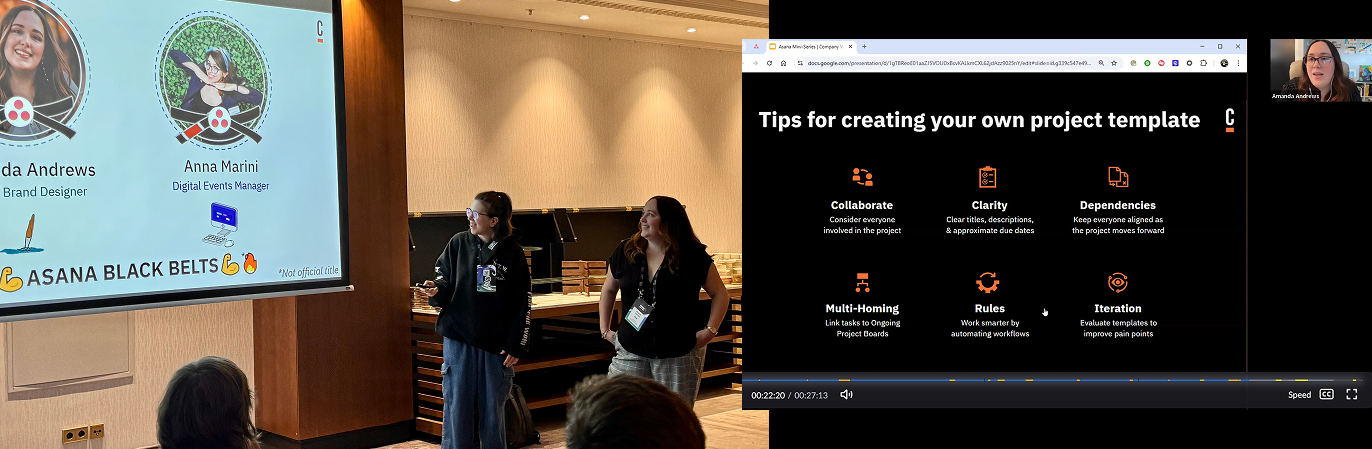
Presenting the Asana system to the full marketing team at Camunda's annual Kickoff, January 2025. When Camunda adopted Asana company-wide, I was invited to present again in May, reaching 100+ live attendees.
The "cookie-cutter" method became standard practice across marketing. When Camunda adopted Asana company-wide, they asked me to present it: in person at the marketing Kickoff in January 2025, then online to 100+ attendees across the full company in May.
"I love how fun you made the presentation. The energy that you two brought to the prez didn't go unnoticed - I knew what to expect and I was still engaged hearing you talk through everything!" – Mikayla, Learning & Development Manager, Camunda
Outcome
Continuous performance data tracked and reported, informed CEO-level headcount decision
creative capacity, from 9% to 27.5% outsourced work in one year
Live attendees for company-wide Asana presentation, with two invited presentations in 2025. (in-person at Kickoff + online session)
The team reported better workload balance and more time for creative work, backed by the quarterly assignee data.
Nobody handed me this brief. I saw the problem, built the system, and got nine squads to change how they work. That is what it looks like when a designer builds infrastructure instead of just assets.
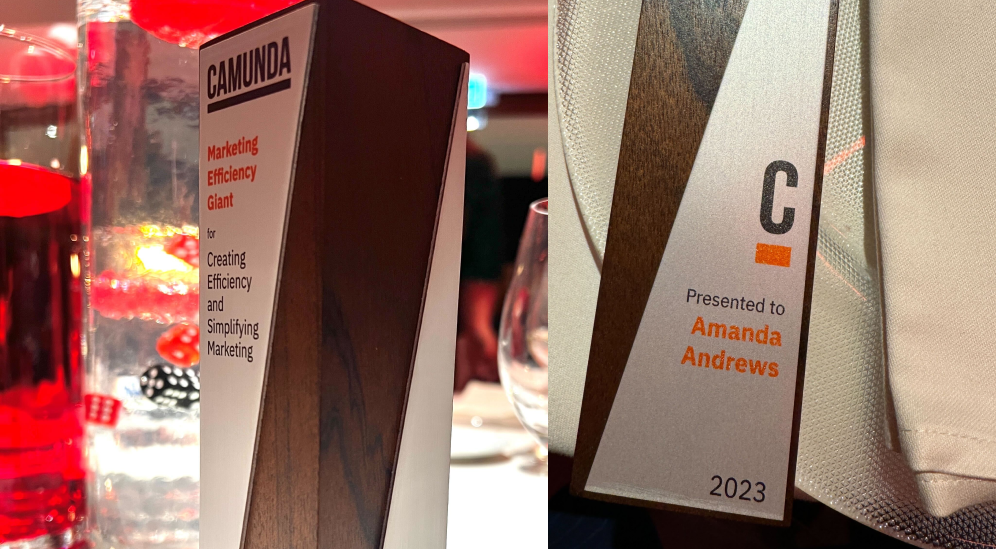
Awarded Marketing Efficiency Giant, Camunda Go-To-Market Summit 2024: For creating efficiency and simplifying marketing.