Five years of CamundaCon: from collaborator to conductor
CamundaCon is Camunda's flagship conference and the highest-visibility brand moment of the year, where the company's product story, community, and culture converge in one place. The obvious story is the growth: from zero to 1,000+ in person.
2021 · Virtual only
onsite attendees
2,200 virtual attendees
2022 · First hybrid
onsite attendees
1,900 virtual attendees
2025 · Largest audience
onsite attendees
1,600 virtual attendees
The growth is the backdrop. Over five years and eight events, the event kept changing, and the job changed more. My role moved up the stack:
- 2021–2023: Contribute. Shared production. Learning the scale, the stakeholders, and what it takes to hold a brand together across a hybrid event in multiple countries.
- 2024: Own. Full creative ownership, solo. Then maternity leave, and the brand ran without me in the room.
- 2025: Direct. Player-coach. Art directing a team of three through the largest CamundaCon to date.
- 2026: Orchestrate. A three-stream production model across in-house, agency, and freelance. Same scope, fewer people, and a structure built so I was never in the critical path.Each year the stakes were raised. Each year the brand held. What that took is the story.
"On CamundaCon, Amanda essentially executed what had previously been done by a team of three, owning the full branding workstream end to end, managing external resources, and still not sacrificing quality." – David, Director of Web Marketing, Camunda
Four Chapters, One Connecting Theme
Each year, the stakes are raised. Each year, the brand held.
Chapter 1: Contribute (2021–2023)
From virtual-only to hybrid. Finding the brand language for live events.
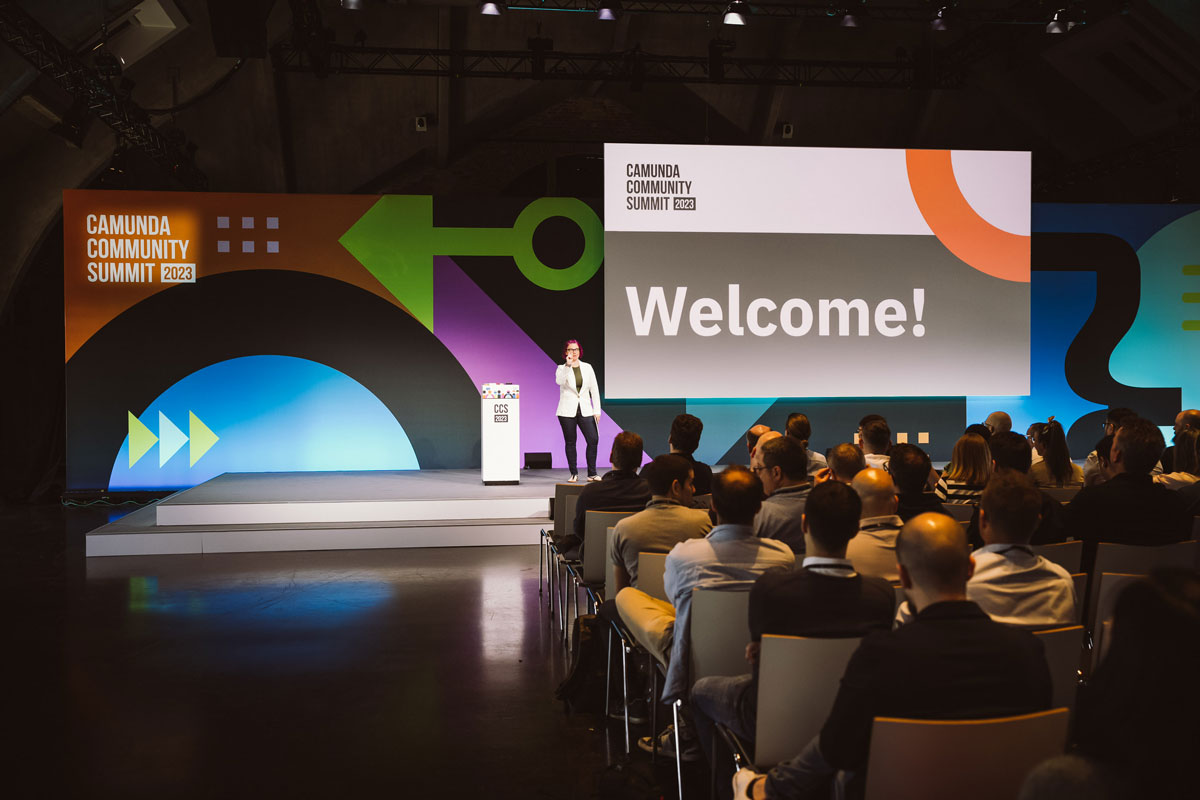
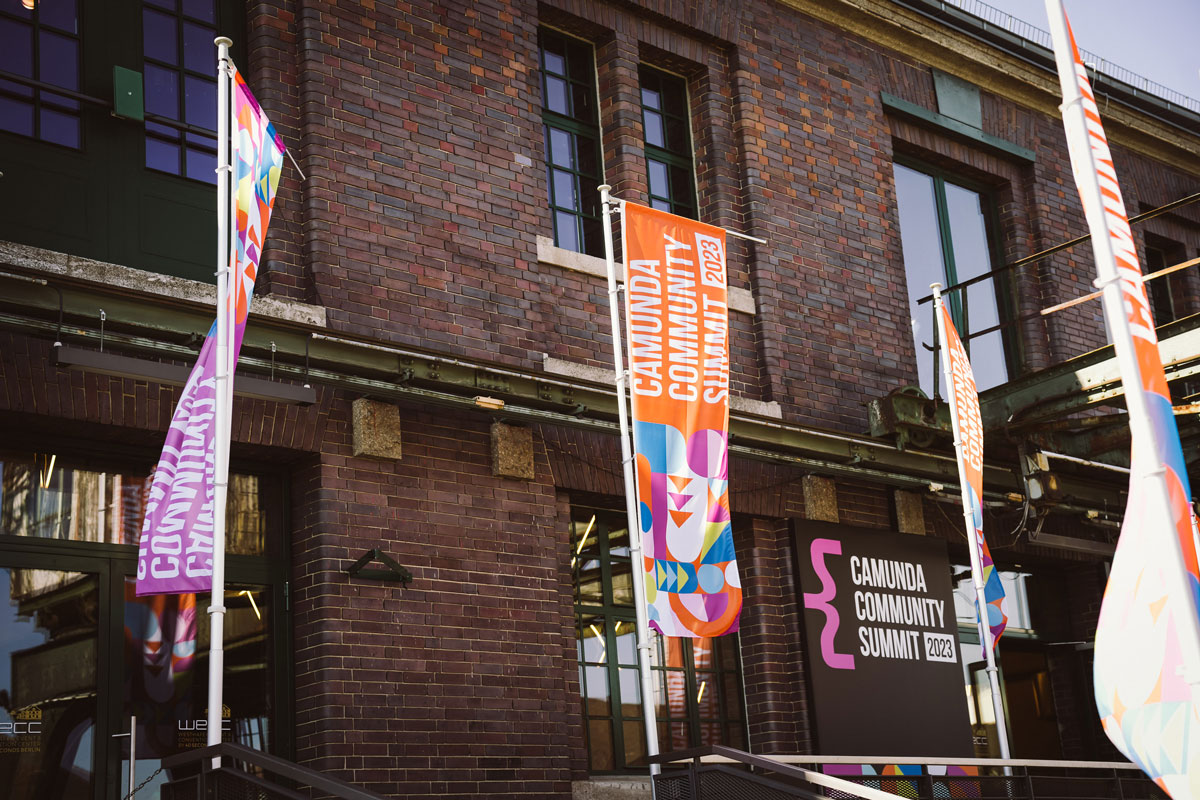
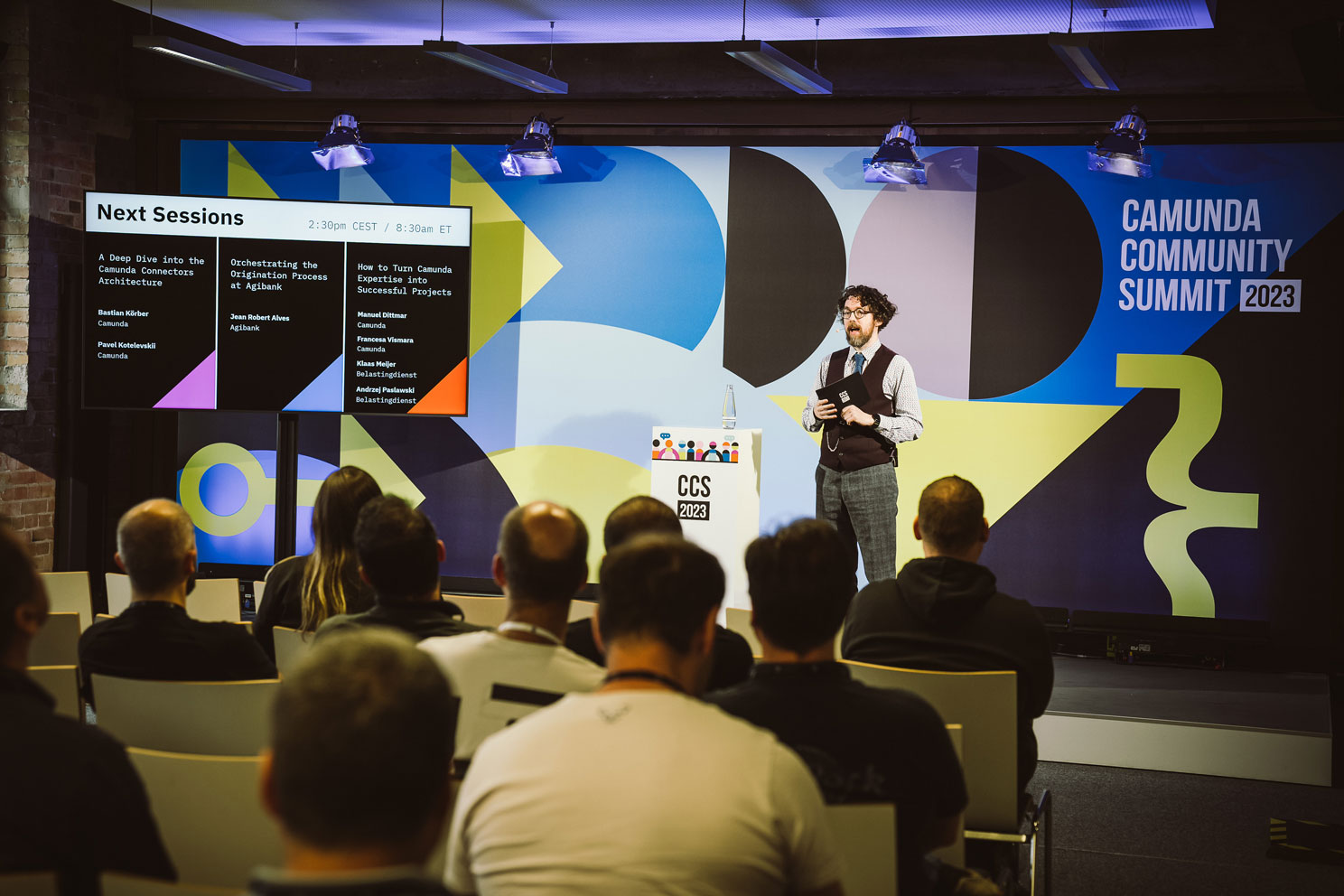
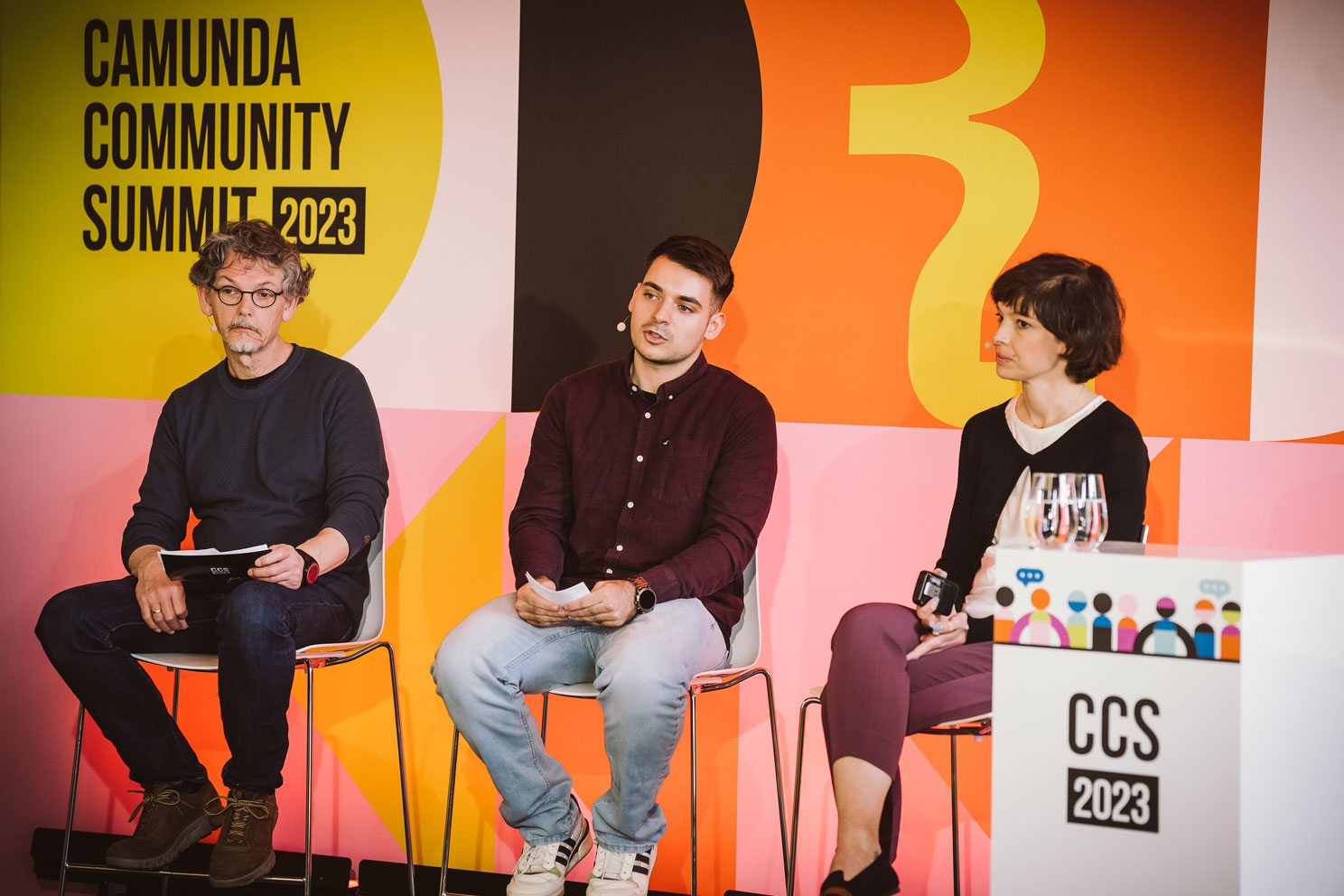
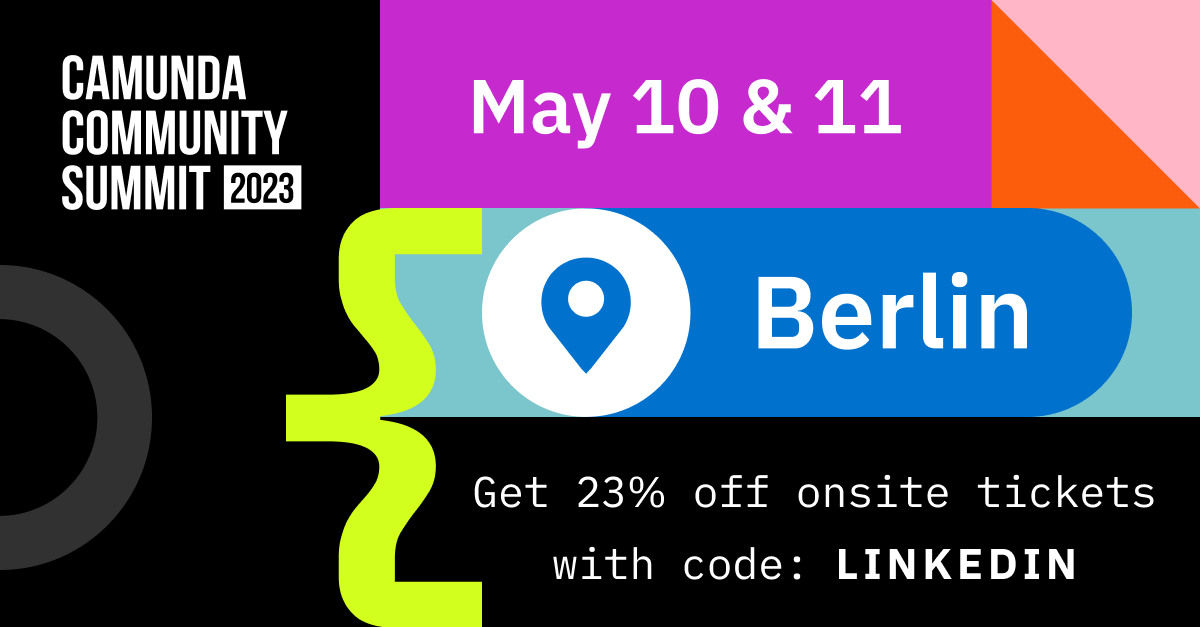
Camunda Community Summit 2023: The creative concept rooted in Camunda's own product geometry, applied across venue, social, streaming, and digital.
The first three years were shared production: digital and print split across the creative team, and the real education in what it takes to hold a brand together across a hybrid event with thousands of attendees in multiple countries.
The high point was Camunda Community Summit 2023. The concept came straight from the product: geometric shapes as building blocks, repeating patterns, illustrations of people for community, vibrant colors for the developer audience. It was the first time the event brand had genuine creative conviction.
"Got so much great feedback about the community summit from many community members (newbees, long term followers, champions). Whatever we did, and how we did it, we hit the vibe." – Nico, Principal Software Engineer, Camunda
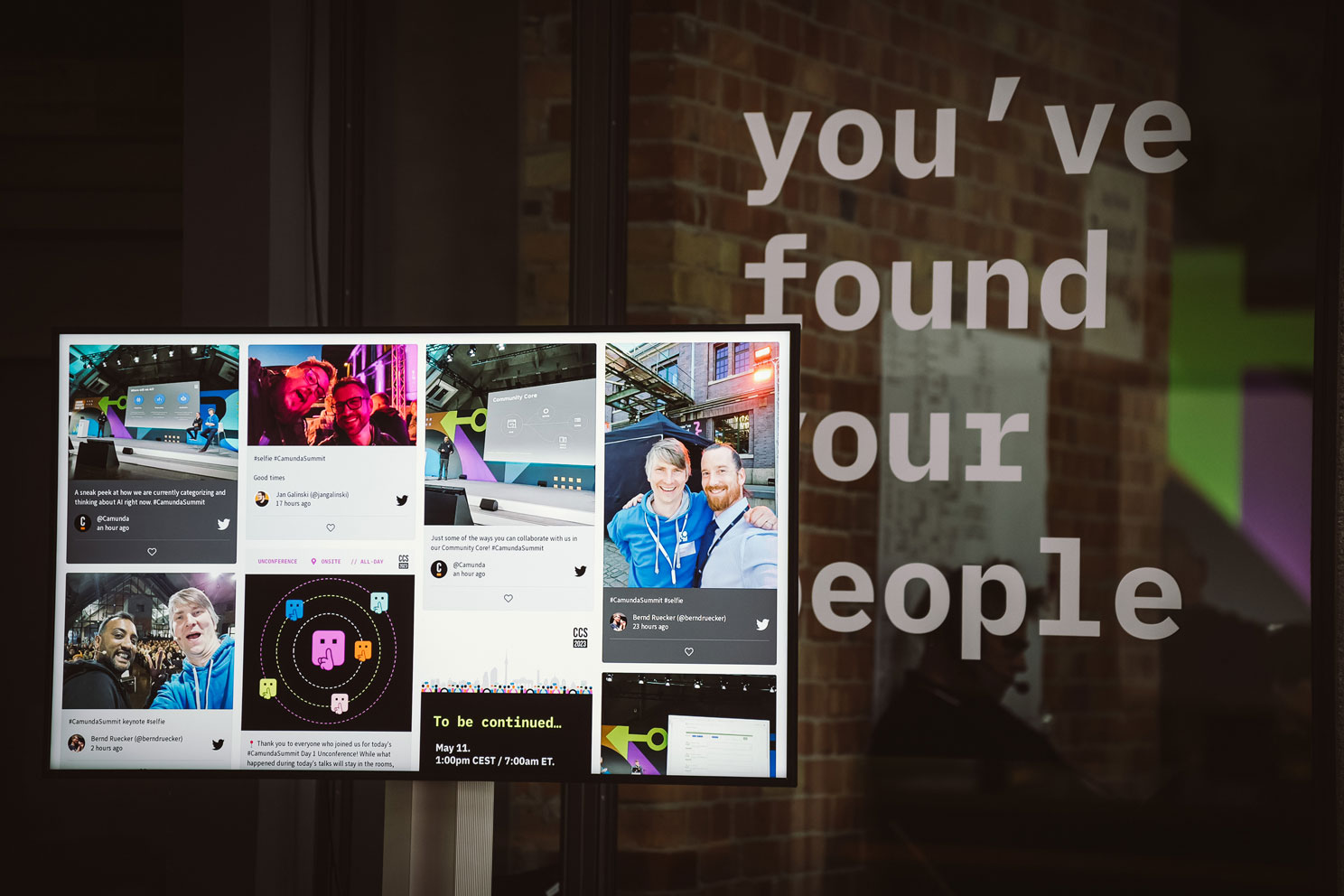
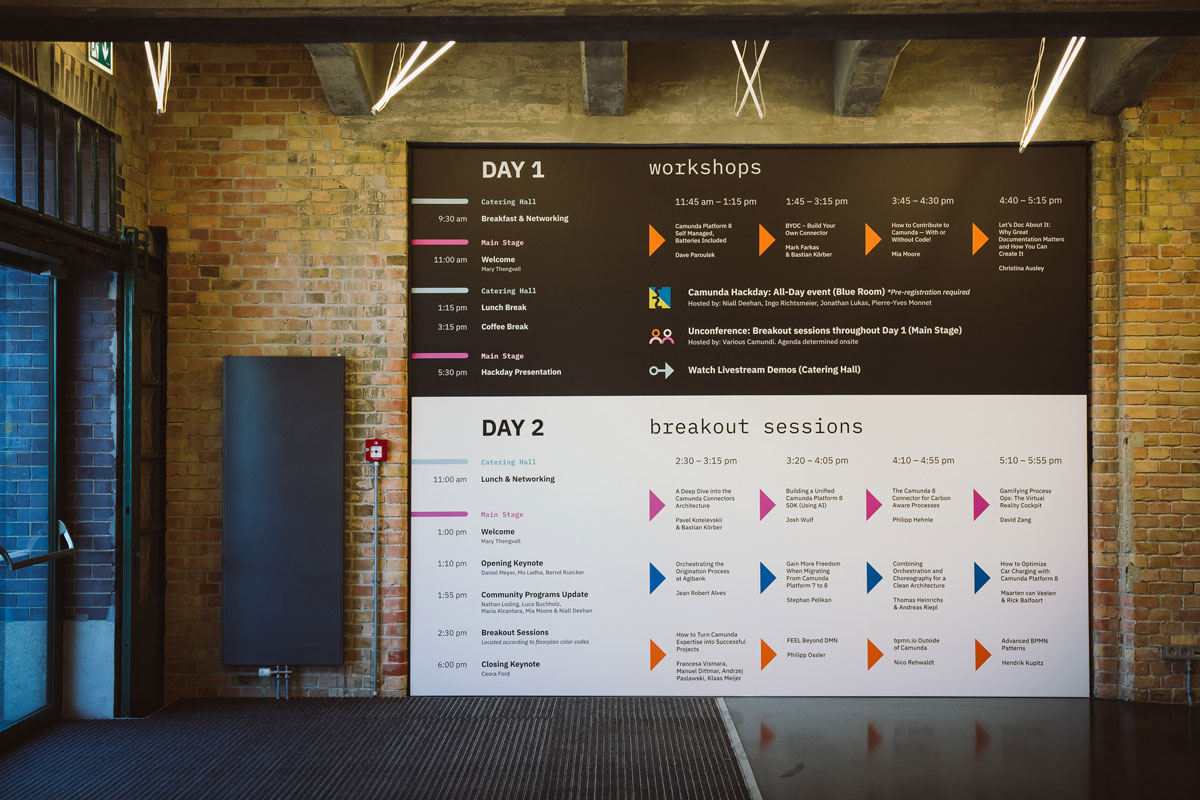
Community Summit 2023 brand system: Product-inspired geometry applied across venue, social, and digital. One concept applied at scale to every surface.
What this period proved: a well-defined concept makes production faster and every downstream decision easier. That lesson is the through-line for everything that followed.
Chapter 2: Own (2024)
The year the system proved it could run without me.
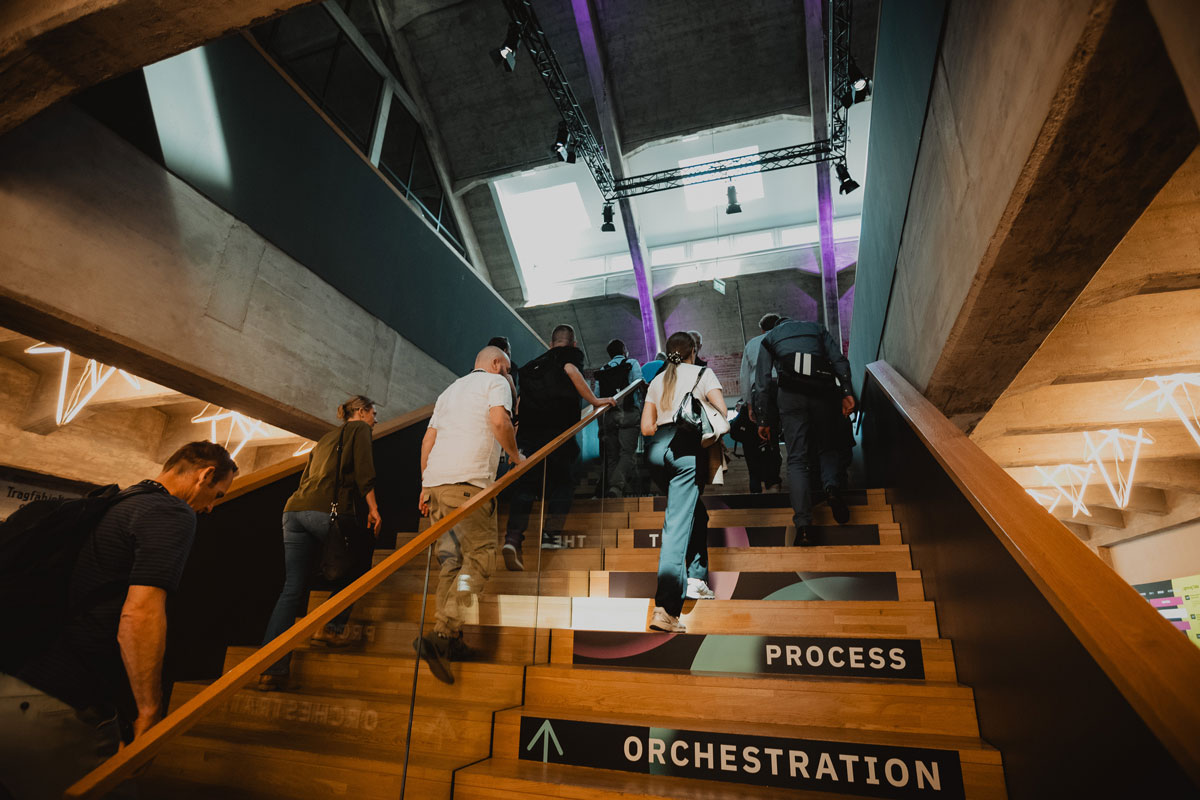
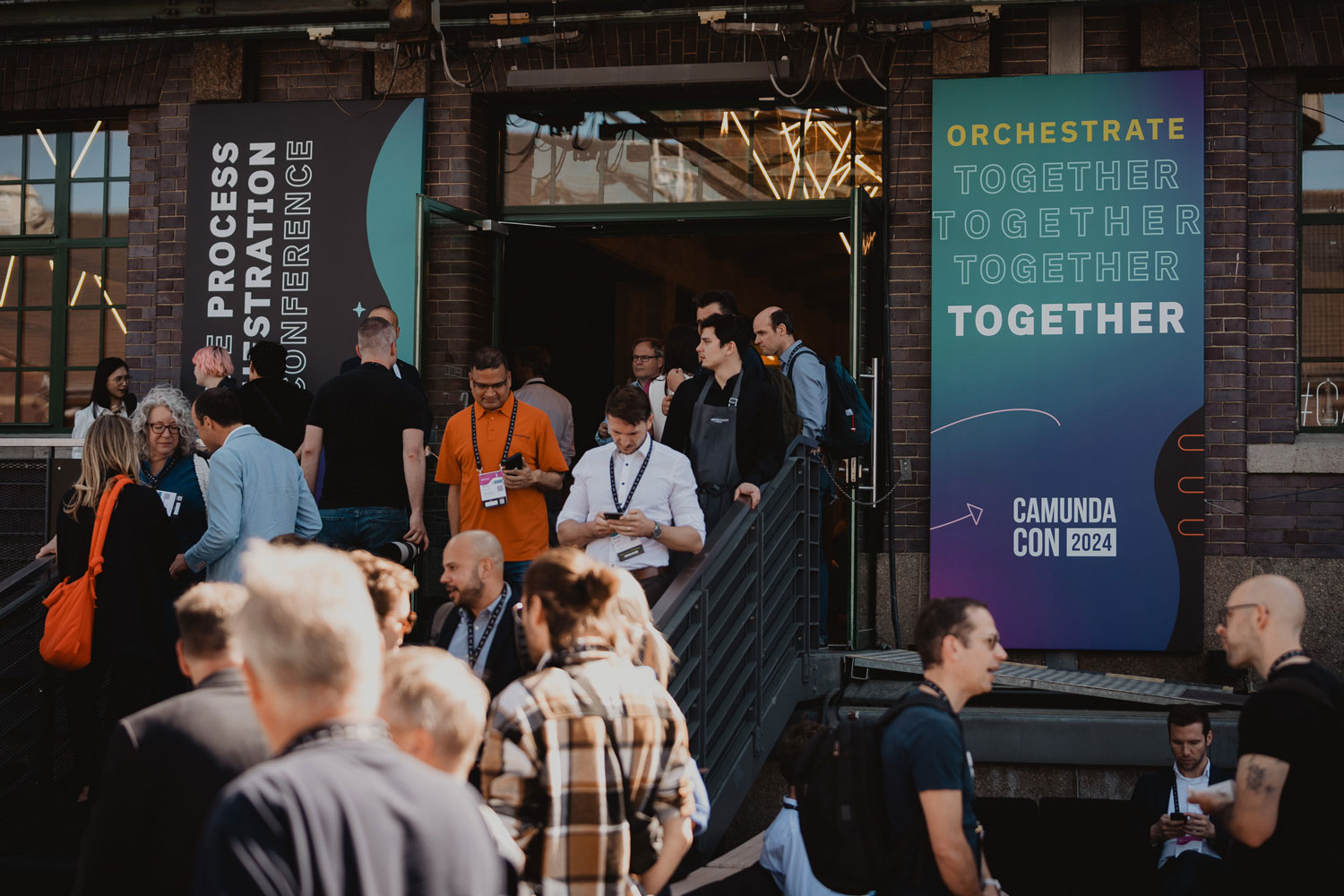
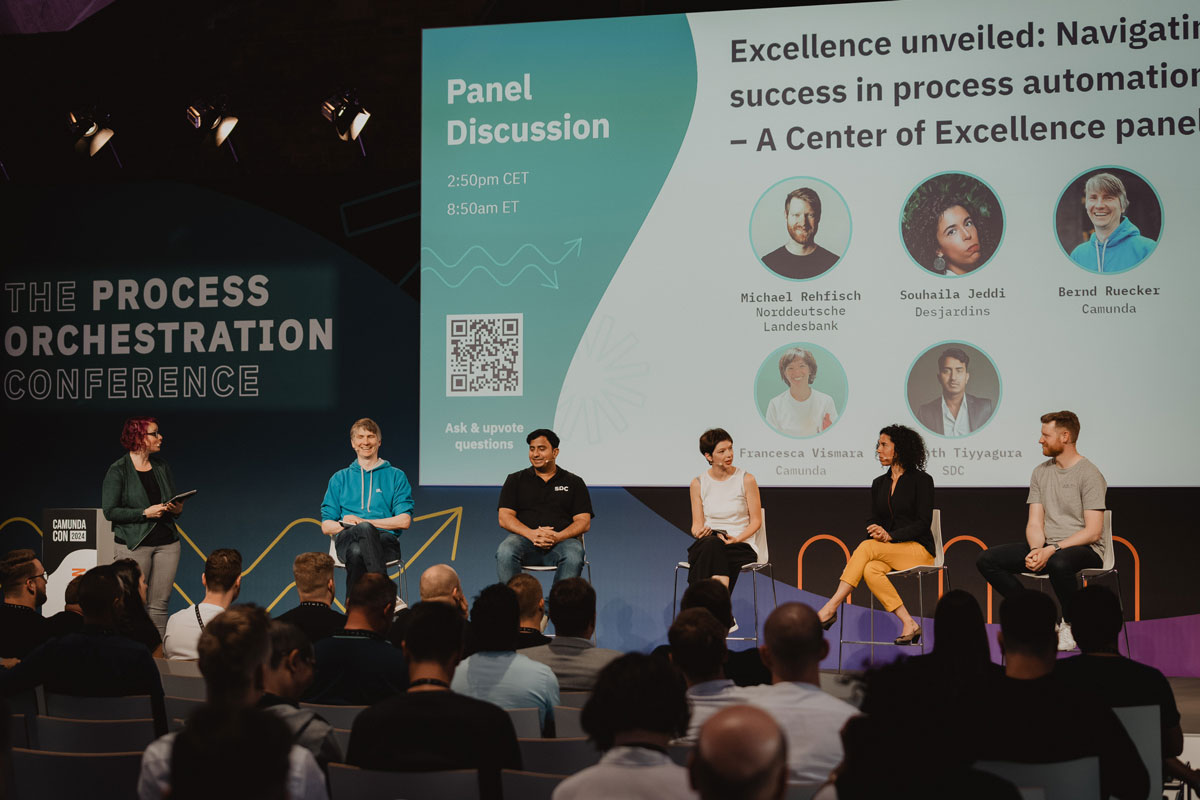
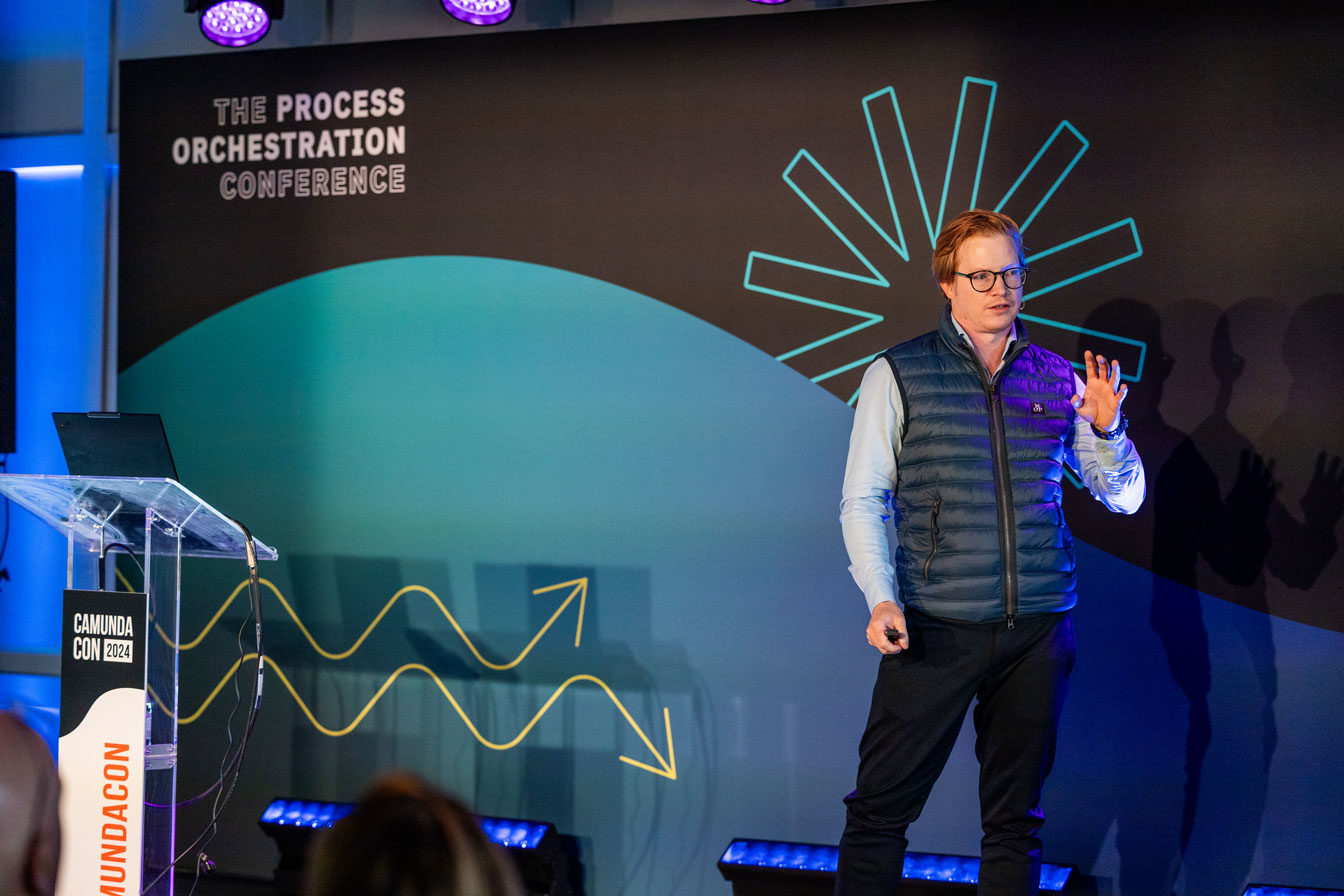
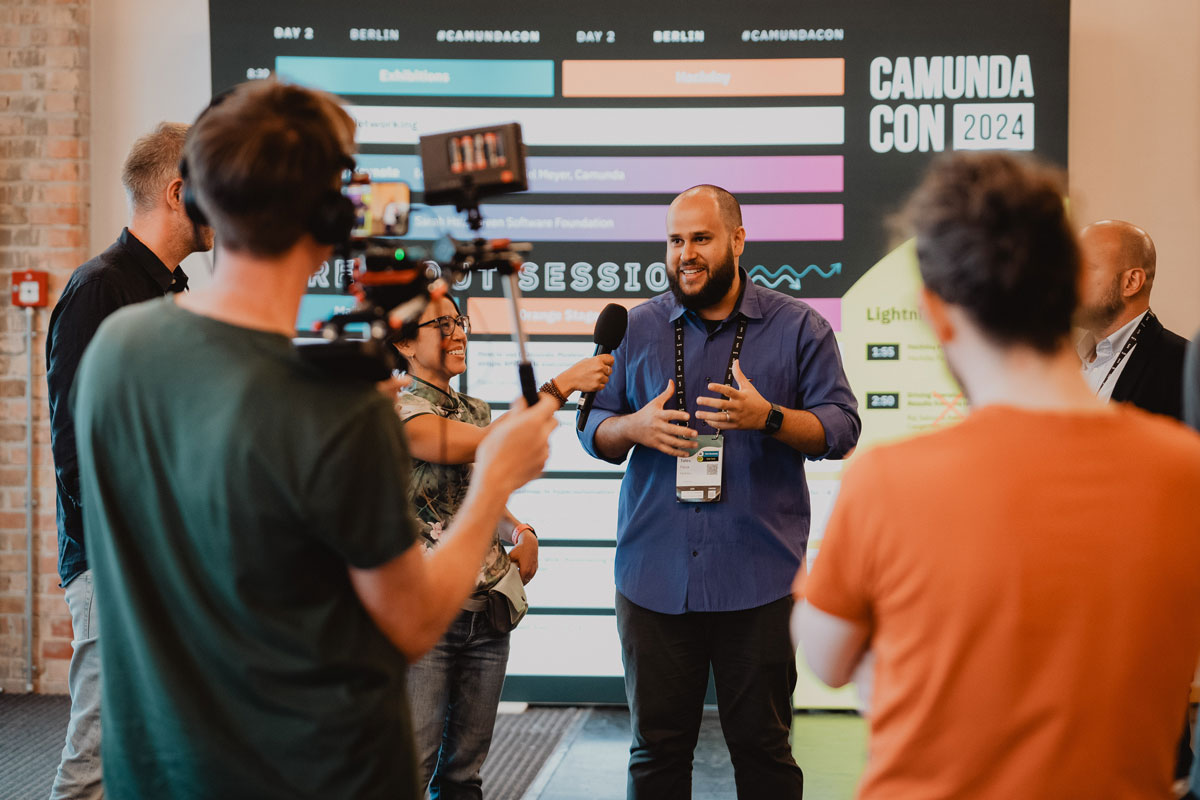
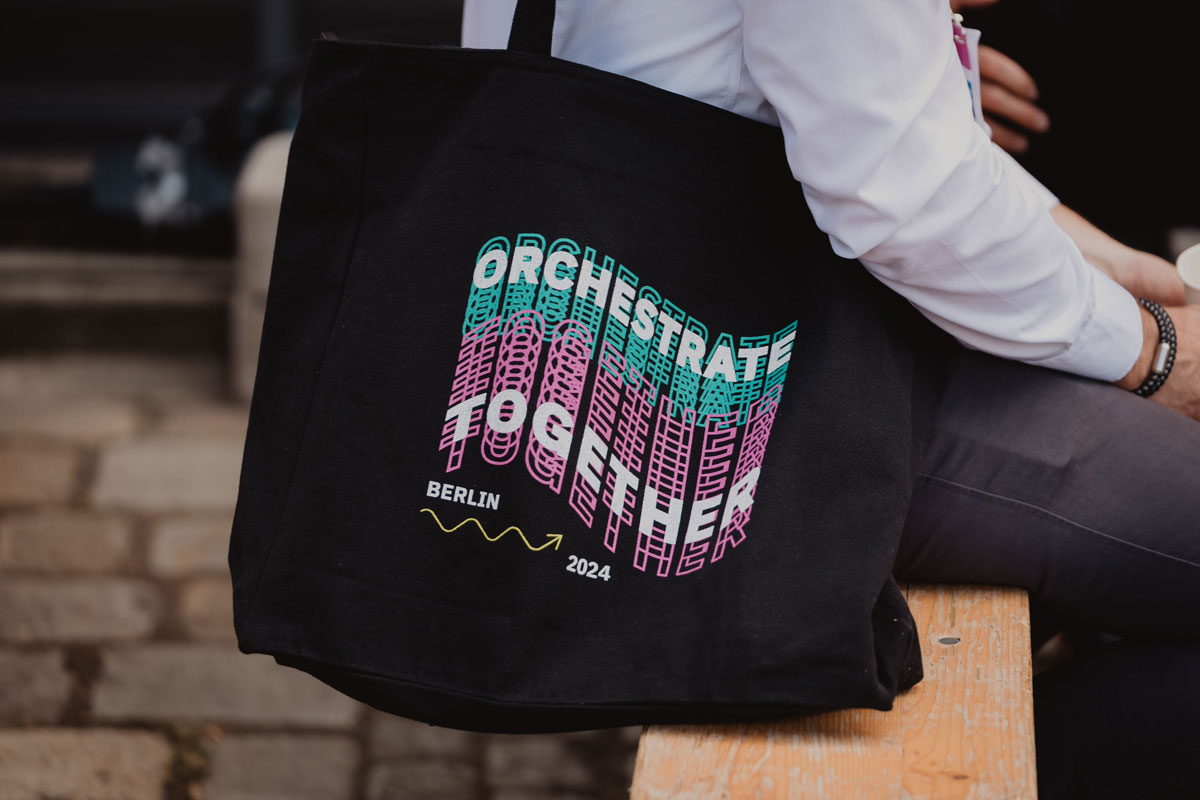
CamundaCon Berlin 2024: Full creative ownership from concept to main stage.
For CamundaCon 2024, I owned the full brand for the first time. From concept through execution, every touchpoint, no shared responsibility. The Berlin event in the spring was the creative proving ground: a new visual direction and a complete brand ecosystem built from scratch, the most complex production I had managed solo to that point.
The brand work was compelling enough to earn unpaid national press. An event photo ran in Tagesspiegel, reaching 9.2 million monthly online users and 102,000 print copies.
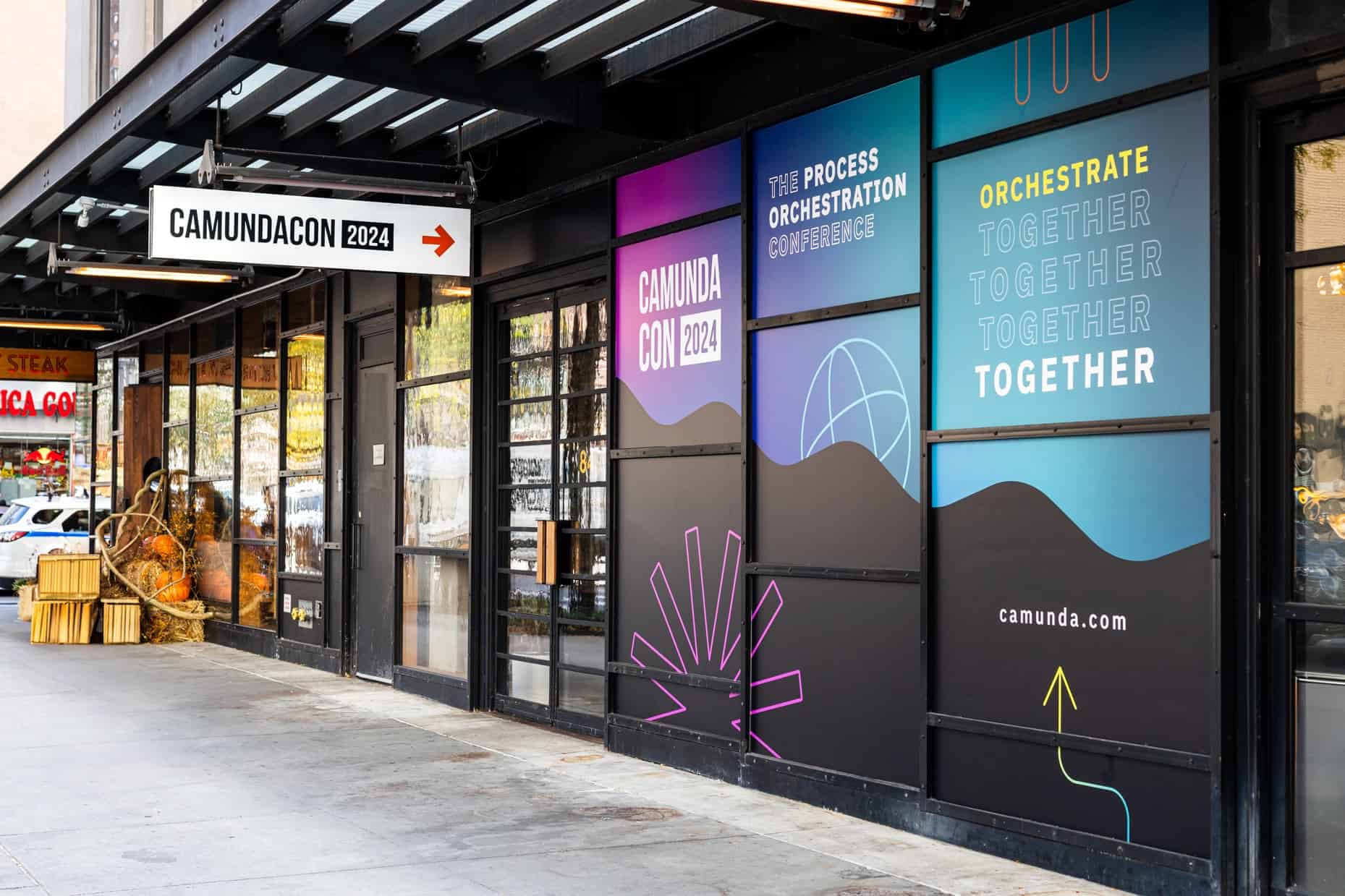
Then I went on maternity leave before CamundaCon NYC 2024. Two new designers took the Berlin system and applied it independently to the NYC event, and it held. Every surface, every template, every output stayed on-brand without me in the room. That was not luck. It was the result of building a system clear enough that another designer could pick it up and run.
"When I joined the Camunda Brand team, Amanda had just gone on maternity leave, so I stepped into a completely new company, brand system, and visual language. Thanks to the solid brand and design system she had established, I was able to get up to speed quickly and contribute to major projects, including our conference in New York, shortly after joining." – Borko, Brand Designer, formerly Camunda
Berlin 2024 and NYC 2024: Two different designers, two different cities. The same brand system ran without me in the room.
What this chapter proved: a brand system is only as good as its ability to outlast the person who built it. Berlin to NYC was the test. It passed.
Chapter 3: Direct (2025)
Largest audience in Camunda's history, leading a team of three plus externals.
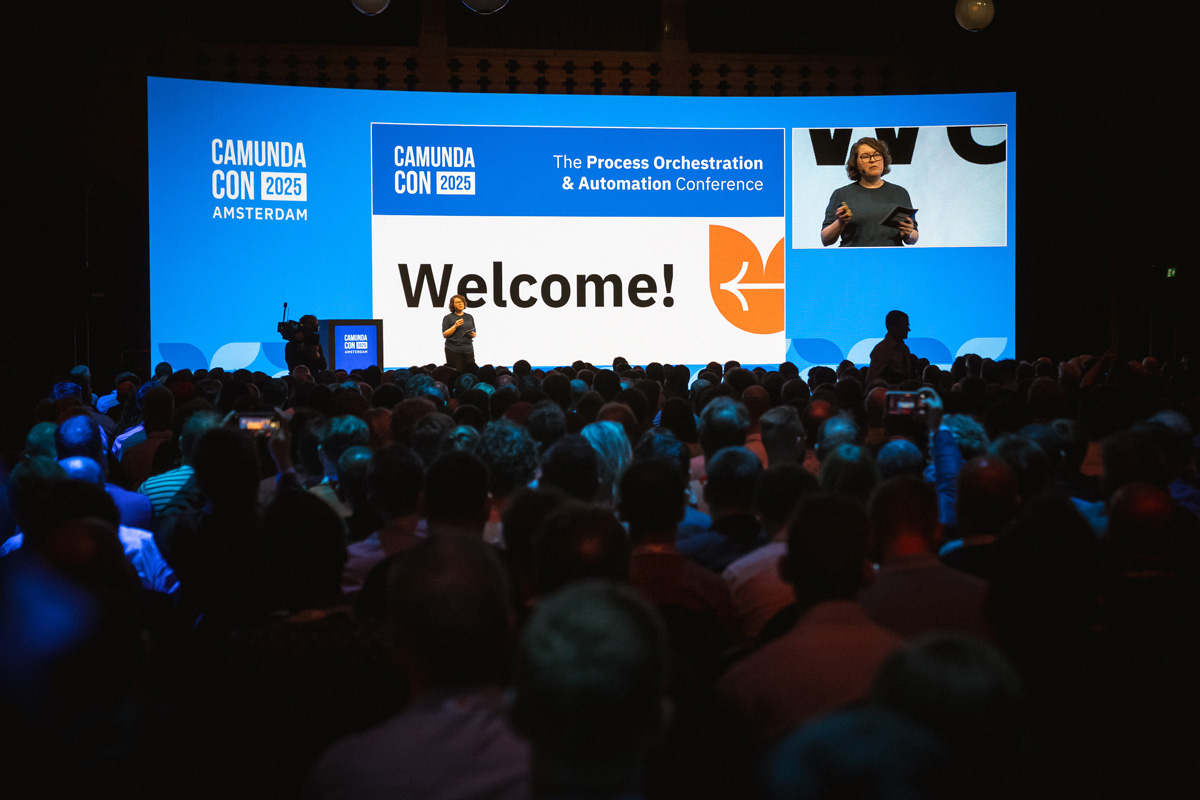
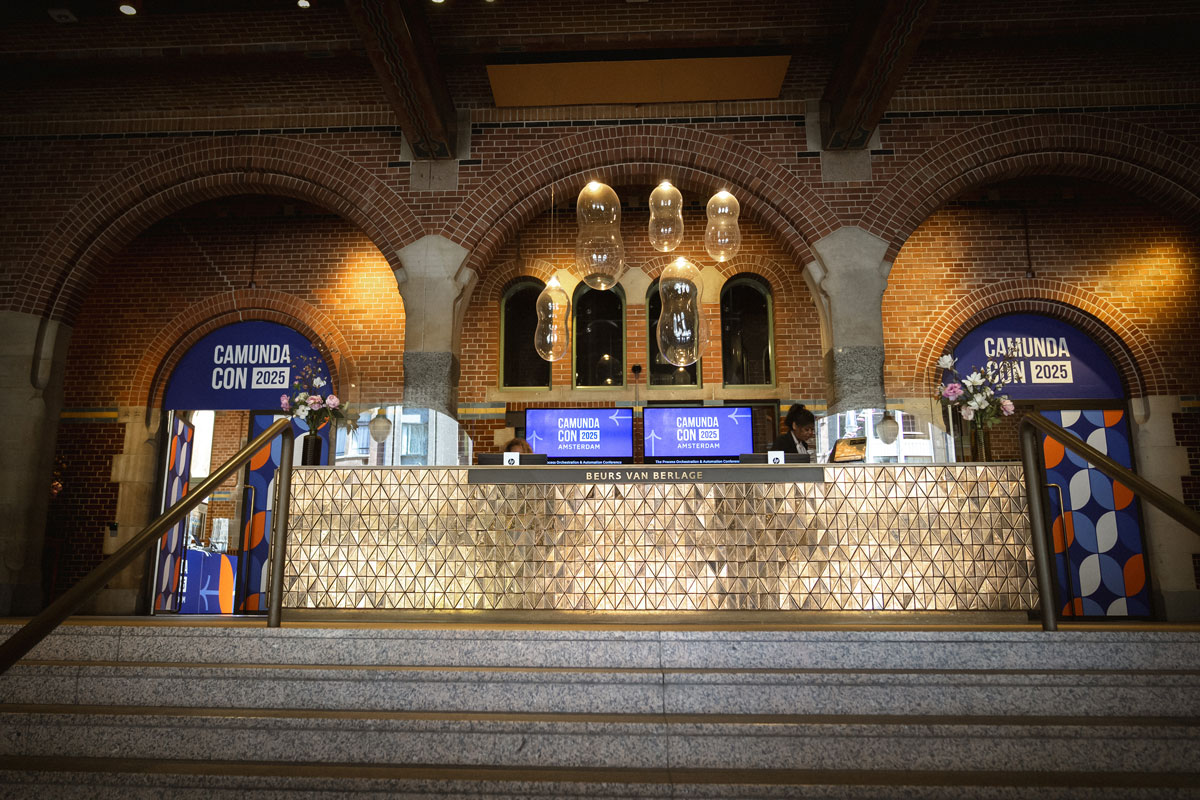
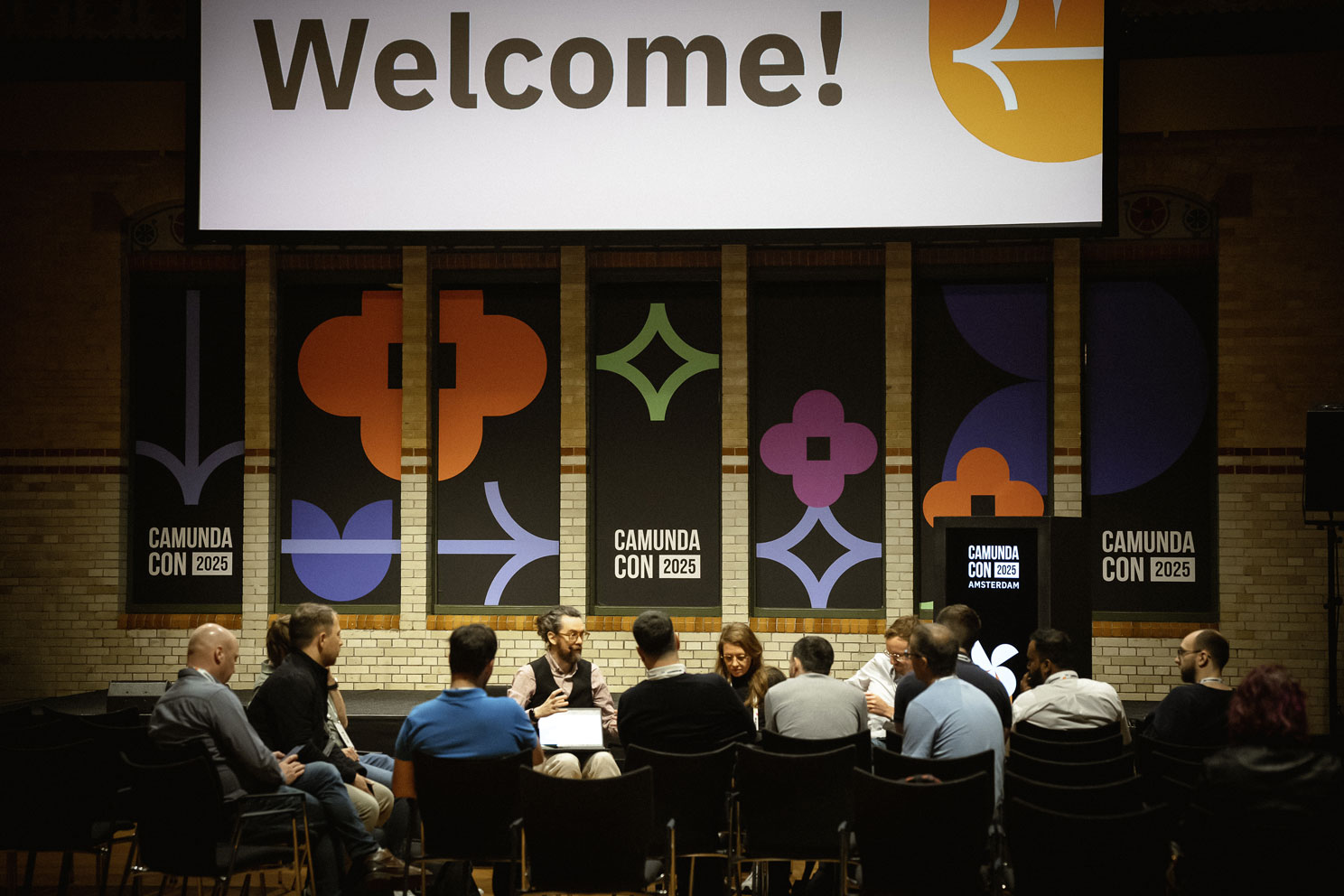
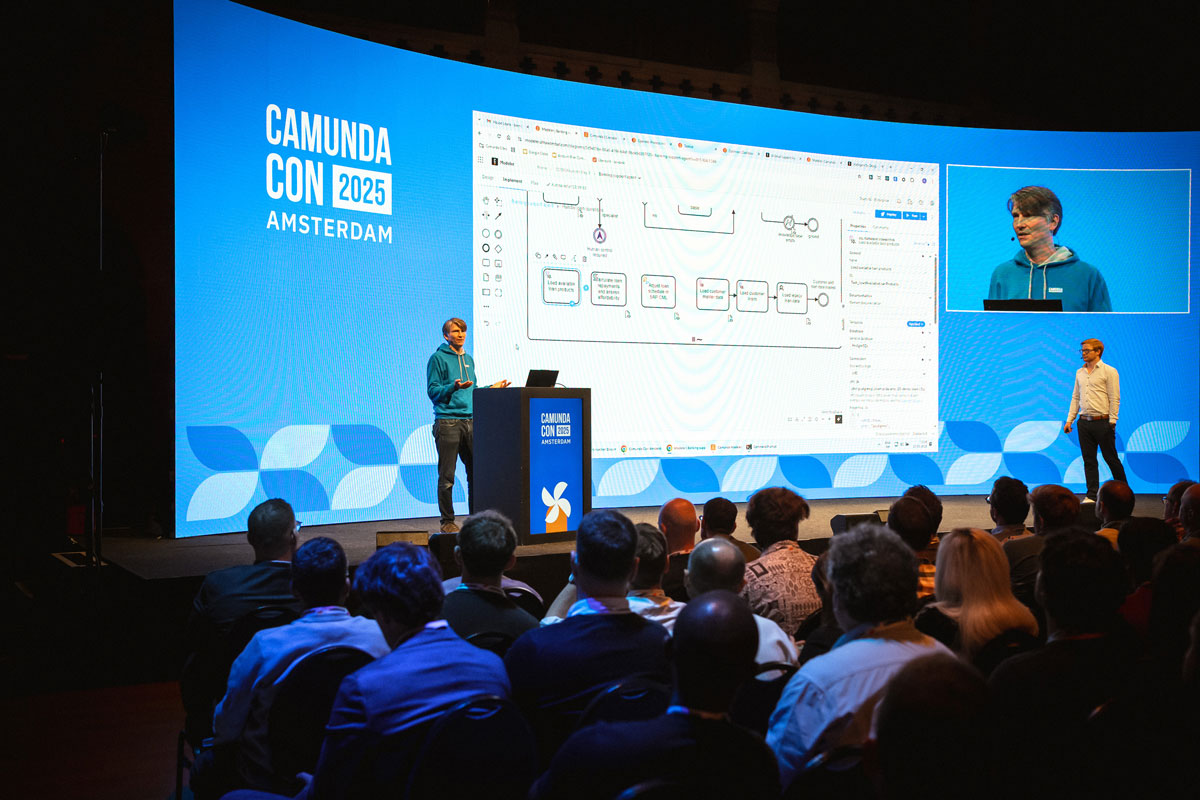
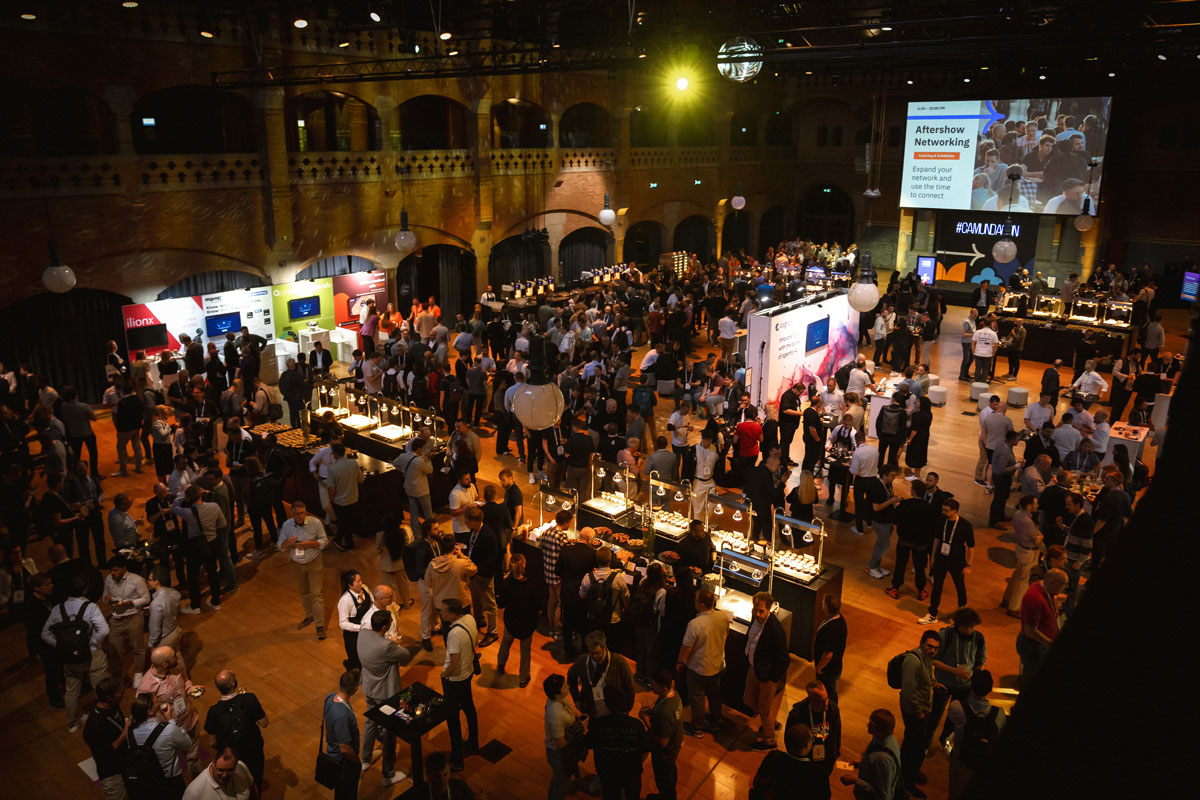
CamundaCon Amsterdam 2025: 1,000+ onsite attendees and 1,600 virtual attendees, the largest audience in CamundaCon in history.
For Amsterdam 2025, I art directed a team of three designers through the full creative process: concept development, workload planning, production, and quality control across every touchpoint. This was the most complex event I had led, and the most successful.
The concept combined two ideas. Place: a tulip motif and Dutch florals rooted the identity in Amsterdam. Presence: a deliberate shift to photography as the primary design element across website, social, slides, and promo video. Real faces, real moments, real energy, making the case for in-person attendance before anyone bought a ticket. A new blue palette kept it fresh and elevated while staying connected to the core Camunda brand. The result felt warmer and more human than previous years.
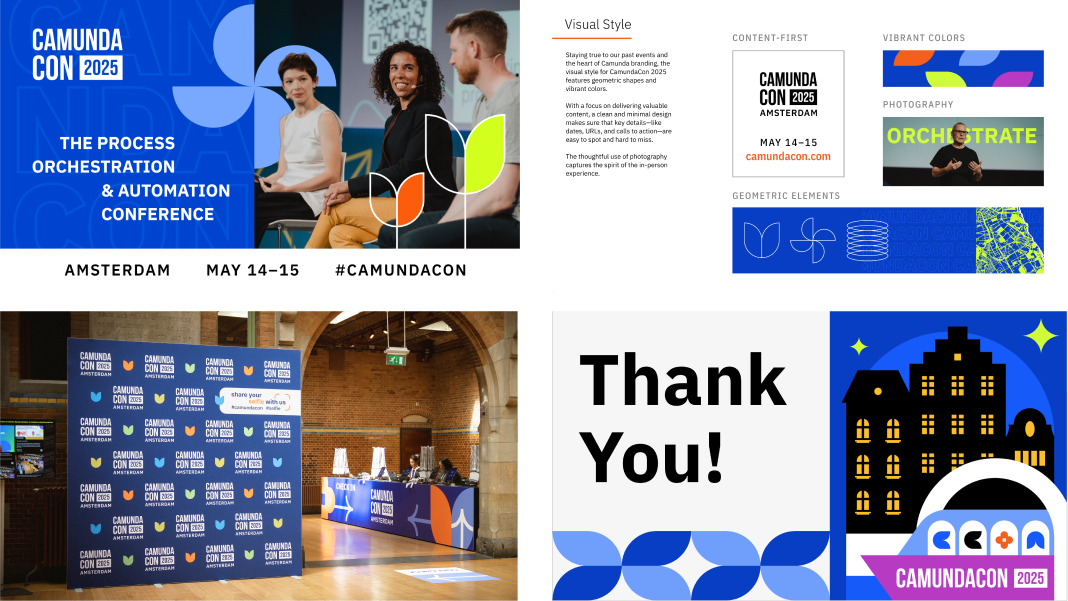
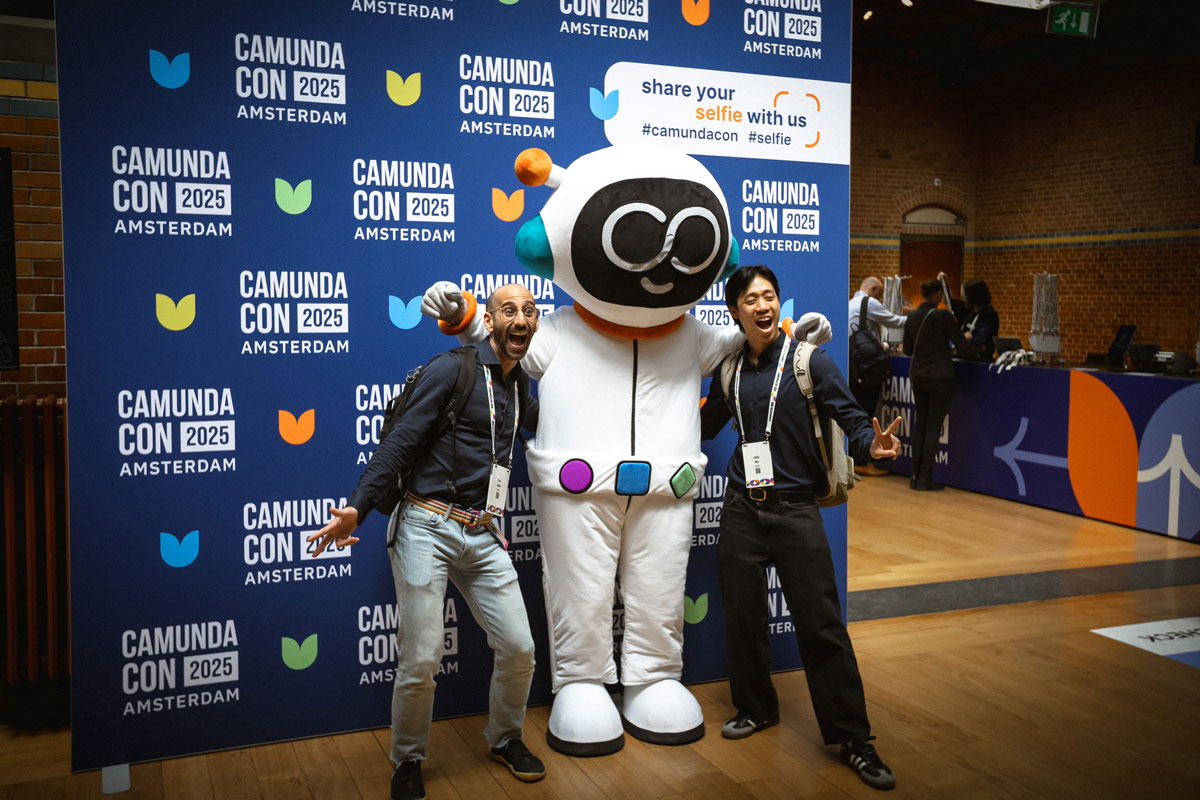
CamundaCon Amsterdam 2025 brand system: Tulip motif, Dutch florals, and a photography-first approach applied across social, slides, venue, and digital.
External coordination covered print vendors, videographers, mascot actors, and on-site production partners. Internally I worked with events, social, corp comms, DevRel, and senior leadership, including shaping keynote presentations with the SLT. The job was holding all of it under a single creative vision, on a compressed timeline, while fielding constant feedback from a company full of strong opinions.
Outcome: CamundaCon 2025 Amsterdam
Onsite attendees
807 external
1,600 virtual
LinkedIn clicks
+48% vs NYC 2024
+81% vs Berlin 2024
Video views
+20% vs NYC 2024
+99% vs Berlin 2024
#CamundaCon public posts
100% positive sentiment
G2 reviews submitted
majority 5 stars
customers in attendance
55 executive meetings onsite
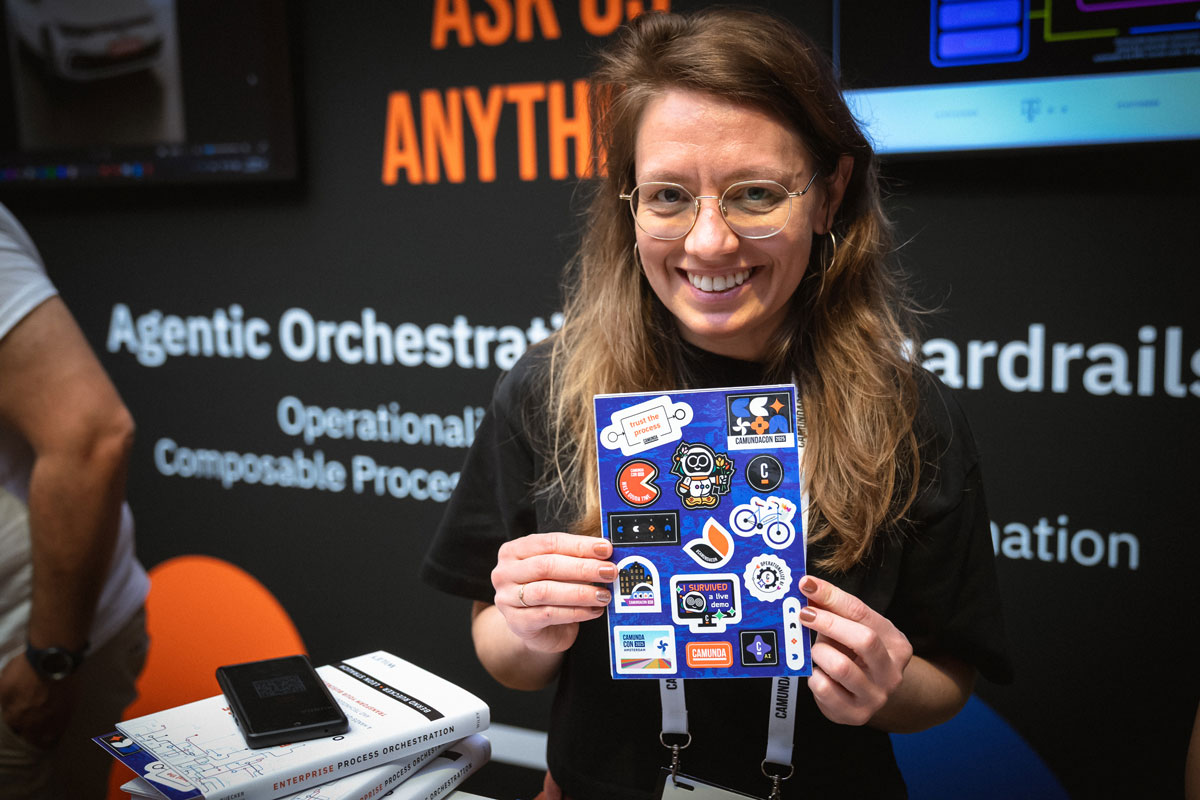
The brand in the room: CamundaCon 2025, Amsterdam.
What this chapter proved: the best creative leadership creates conditions where the work gets better as the team grows. Amsterdam was the highest-attended, best-performing event to that point, built by a team I directed rather than a workload I carried, operating fully as a player-coach.
Chapter 4: Orchestrate (2026)
Same scope, fewer team members, a production model built to scale.
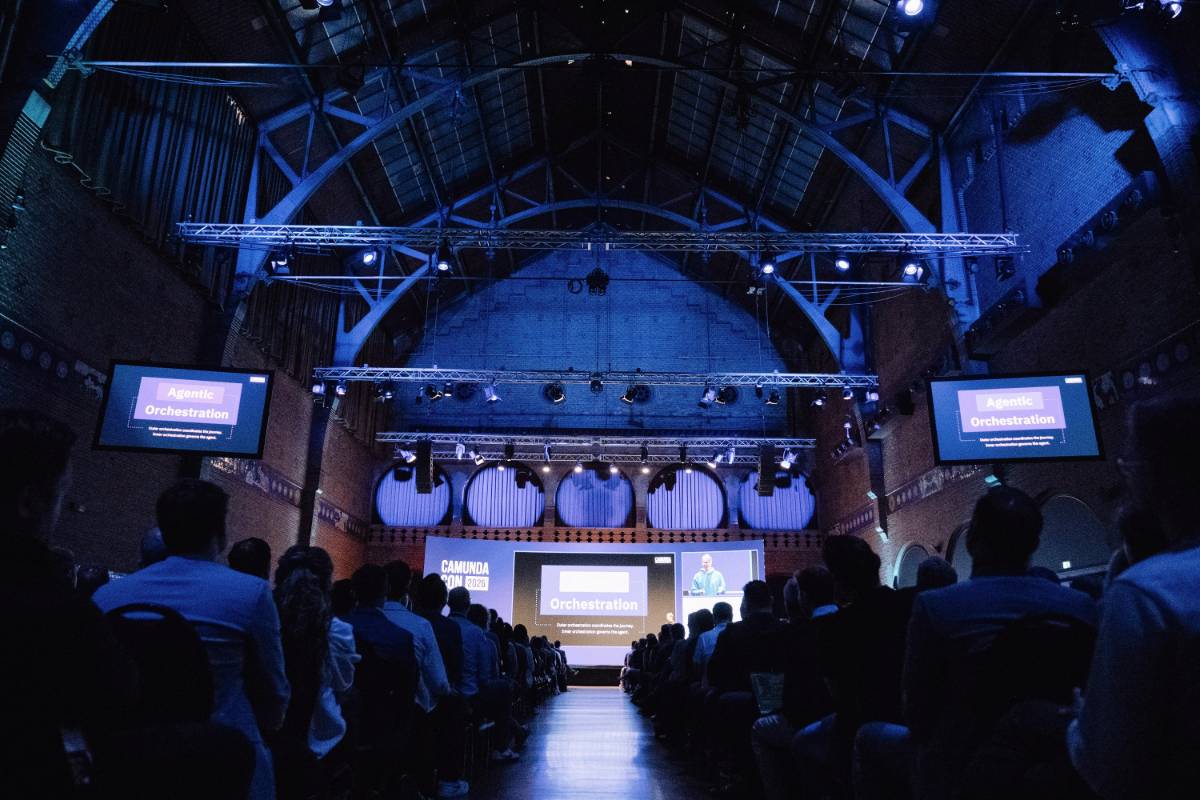
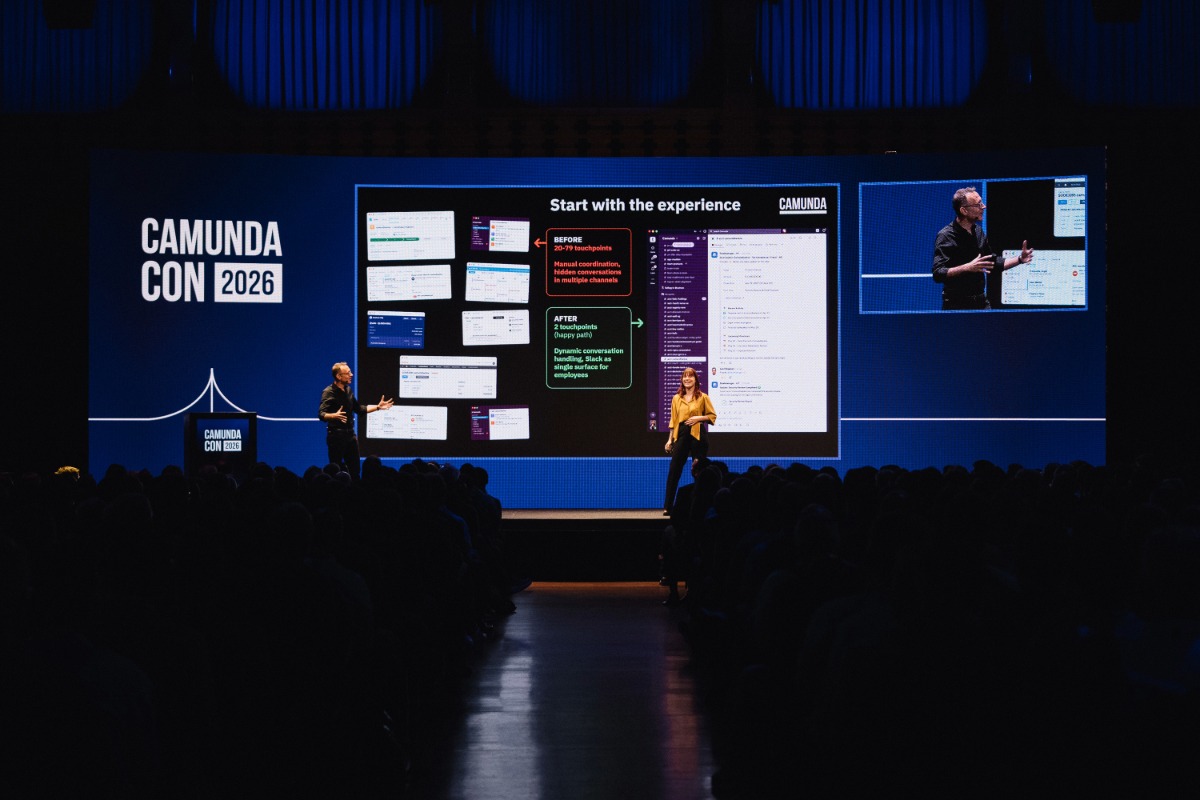
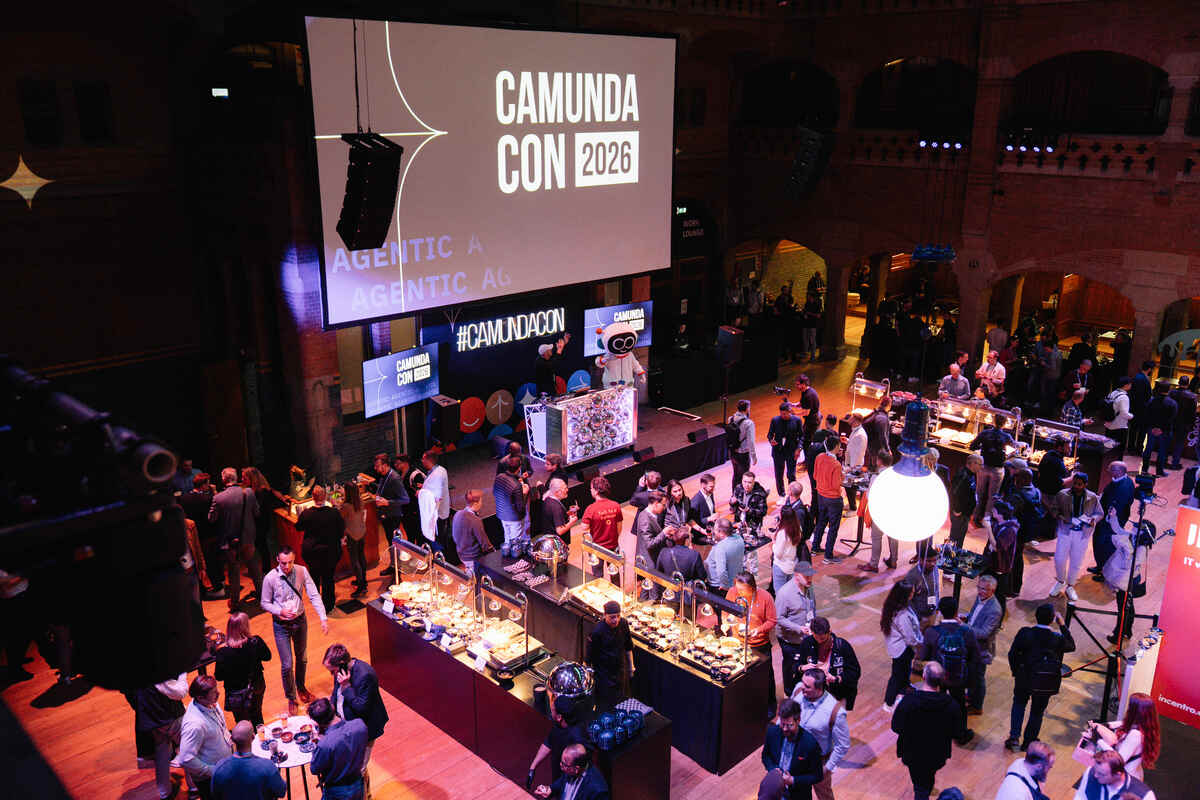
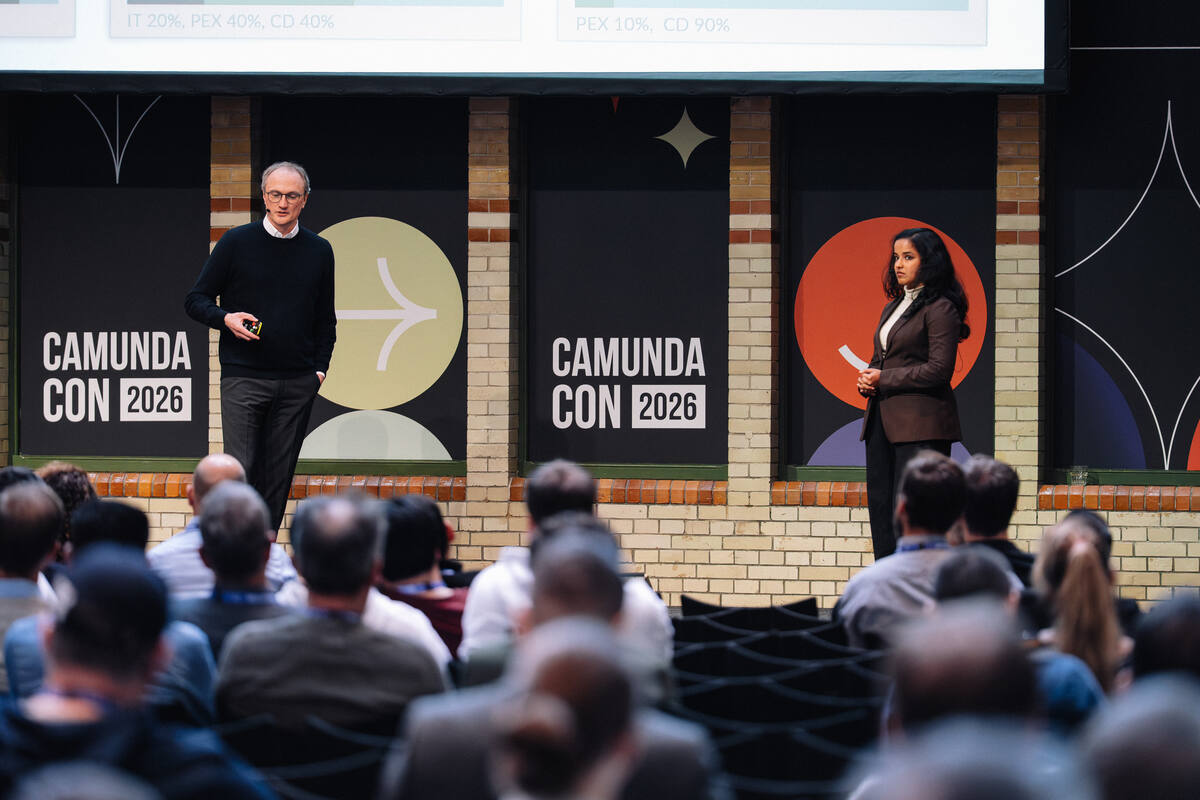
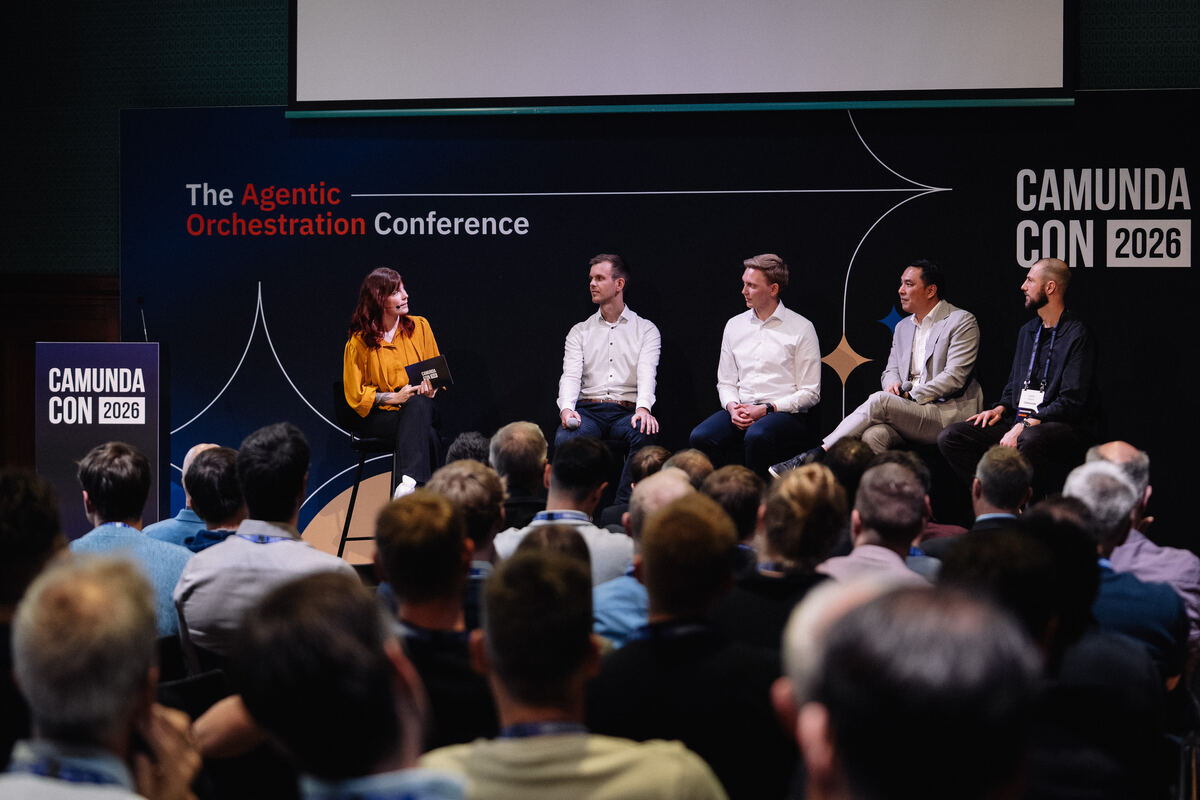
CamundaCon Amsterdam 2026: Packed room for keynote
By 2026 the shape of the work had changed. Fewer designers, bigger goals, new marketing leadership, and new team members onboarded mid-sprint. The scope did not shrink to match. So I stopped organizing the work around who does it and started designing how it gets distributed.
It starts before any asset exists. I open each cycle with a brand kickoff that sets the goals, locks the positioning, and aligns the team on process: clear DRI ownership, approval checkpoints, and freeze dates. Direction first, production second.
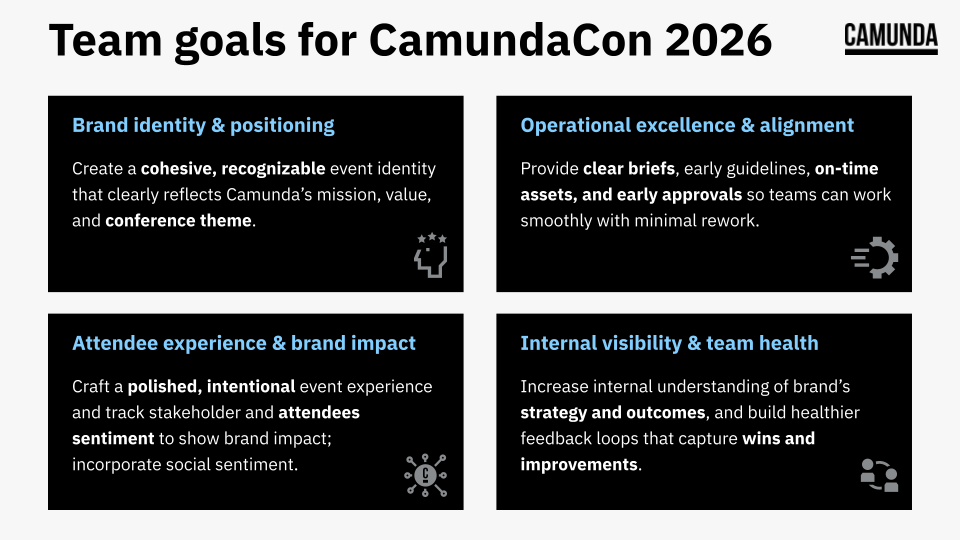
CamundaCon 2026 kickoff: the goals I set for the whole team before production starts.
I ran CamundaCon 2026 as a three-stream production model, routing every task by complexity and brand sensitivity.
- In-house (me). Brand-sensitive and strategic work: color-coding logic, naming conventions, video styles, brand guidelines, the promo video, streaming assets, the main stage background, and keynote direction. Plus the templates that let everyone else self-serve.
- Agency (Project7 Design). Heavy production: the 100-plus-item venue print run, looping promo slides, onsite video, and wayfinding execution.
- Freelance. Surge capacity and last-minute requests.
"Way beyond making things look good, she keeps us fresh while reaching up to our goals. Very adept at knowing which projects need to stay in-house vs. those that can be saved elsewhere." – Shane, Senior Solutions Marketing Manager, Camunda
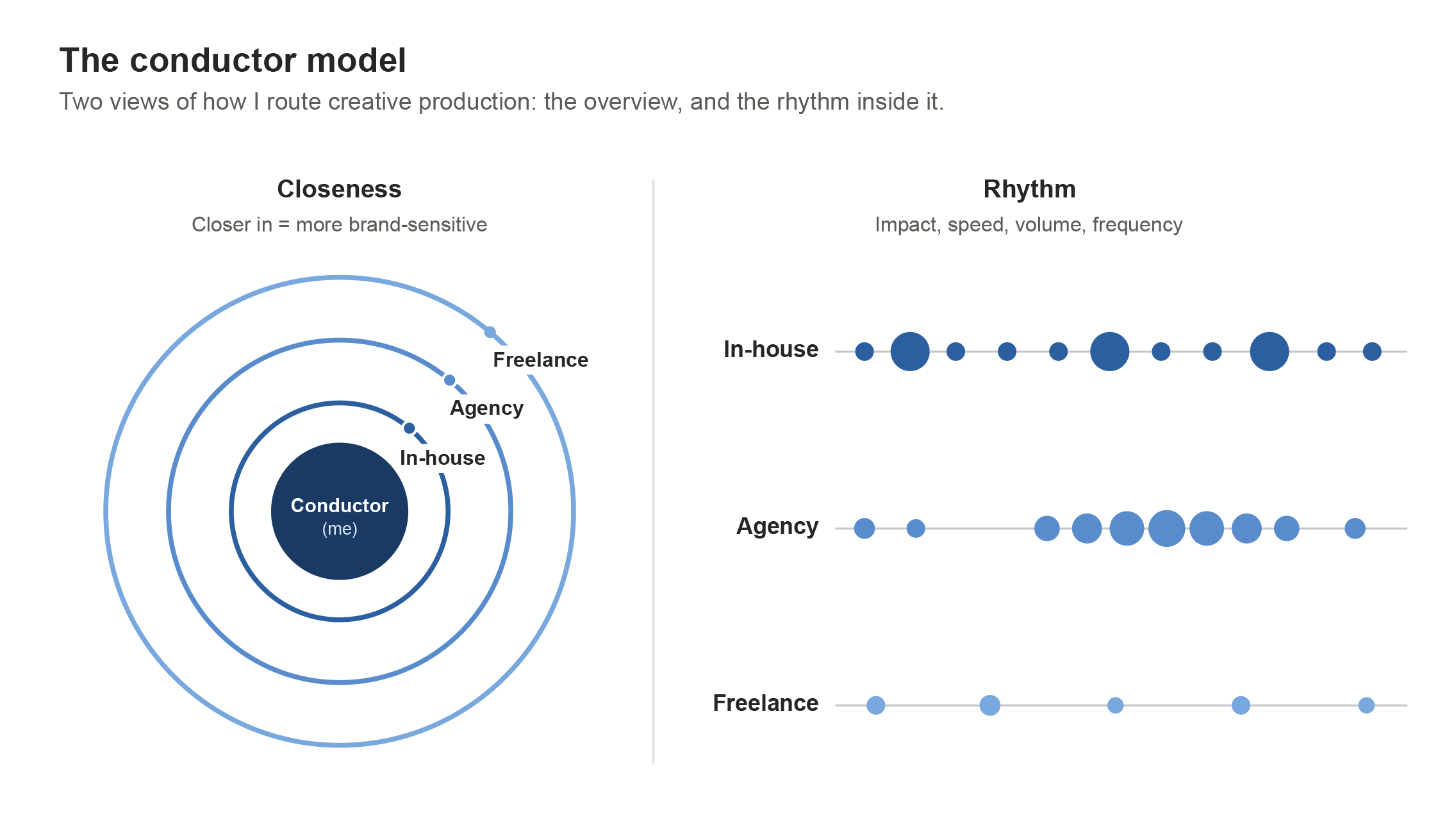
A three-stream production model I created and ran for CamundaCon 2026, routing every task by complexity and brand sensitivity.
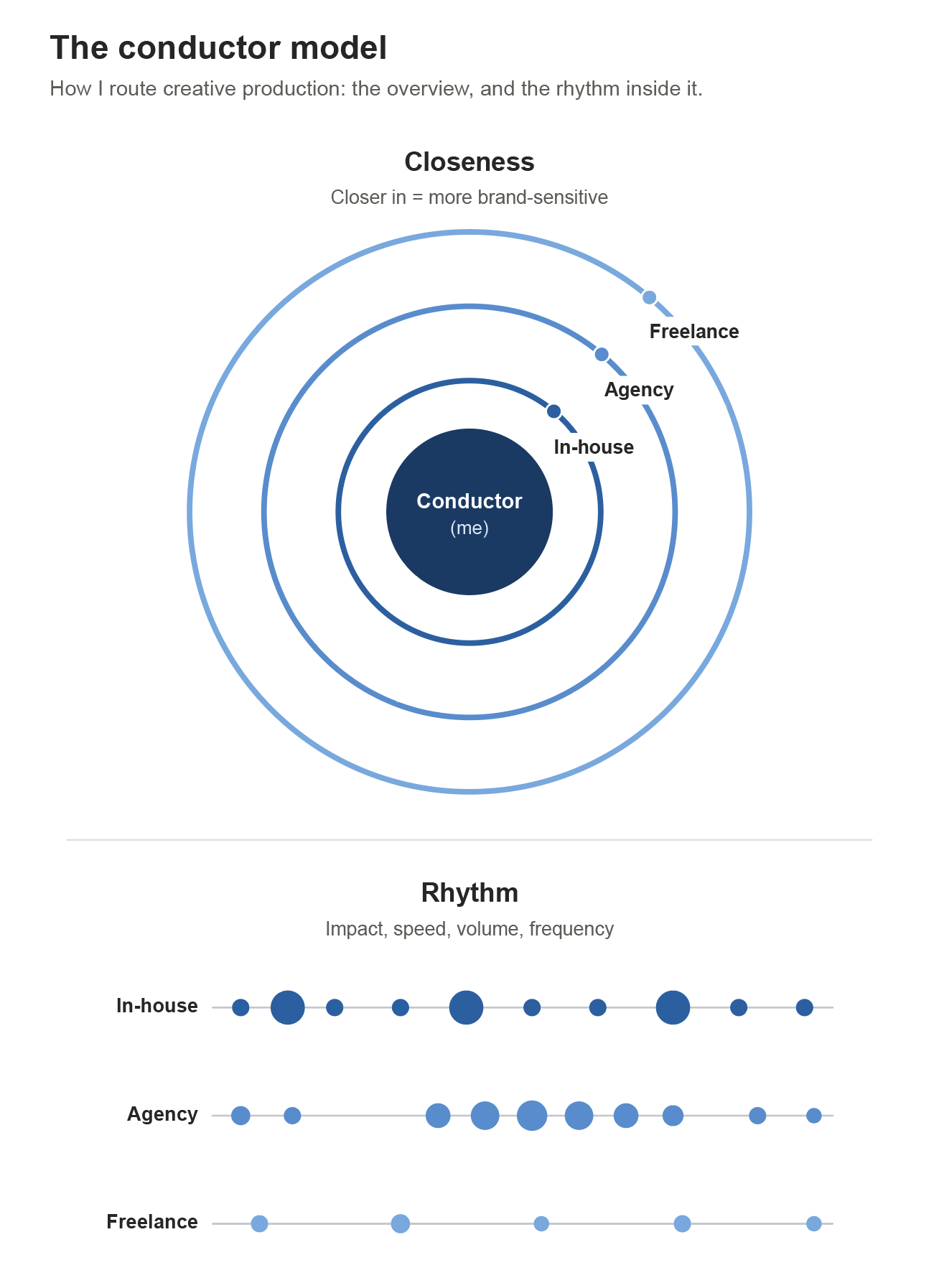
A three-stream production model I created and ran for CamundaCon 2026, routing every task by complexity and brand sensitivity.
Every stream had a clear answer to three questions: who decides, who produces, who covers overflow. The proof was the venue print run, over 100 items with specs arriving in a constant stream rather than a clean brief, on a deadline that landed the same week as our marketing offsite in Iceland. I was in a lava field. The print shipped, because Project7 owned it end to end and joined our bi-weekly creative call to stay aligned. In the two weeks before the event, while I built keynotes, a freelancer absorbed the minor last-minute requests. I was never in the critical path. That was the design, not the luck.
"Amanda set the tone for the creative direction, which guided our team to expand on the existing brand system. Her overall vision for the event branding and her feedback kept the guardrails on over 100 produced pieces, ensuring consistency and cohesiveness across the design." – Kate, Project Manager, P7Design
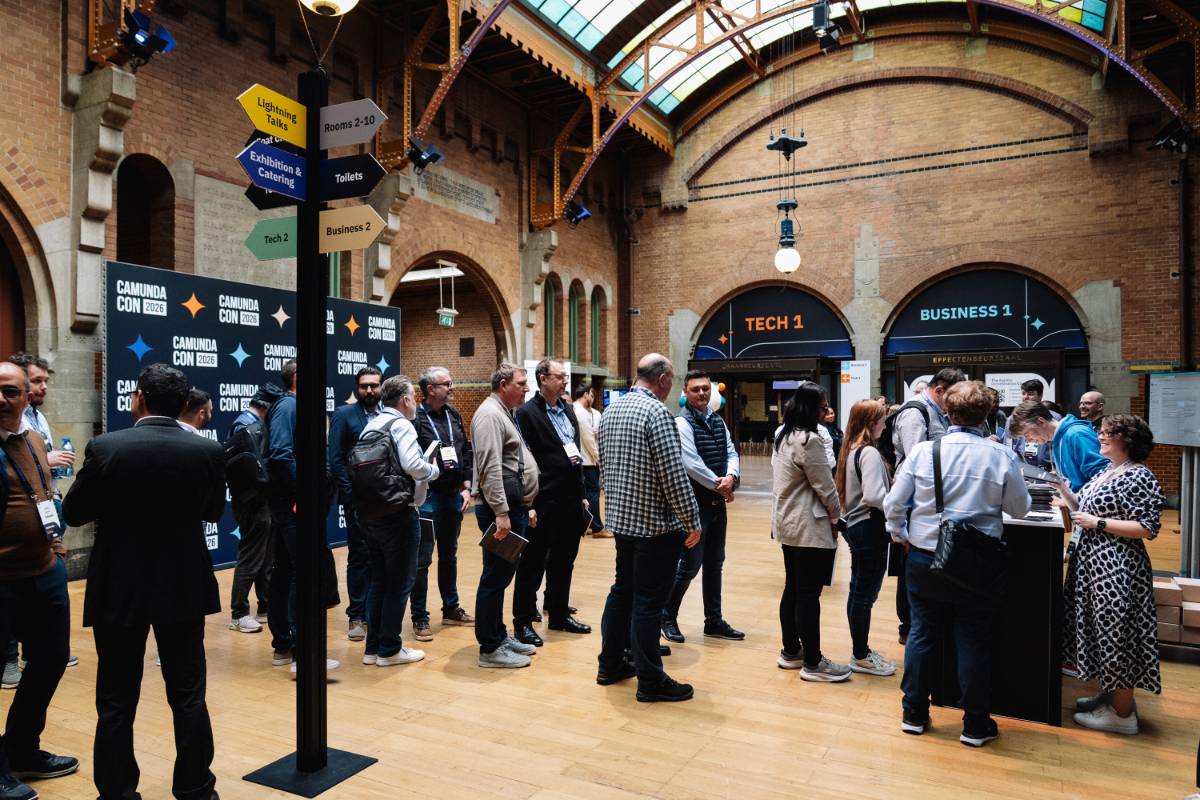
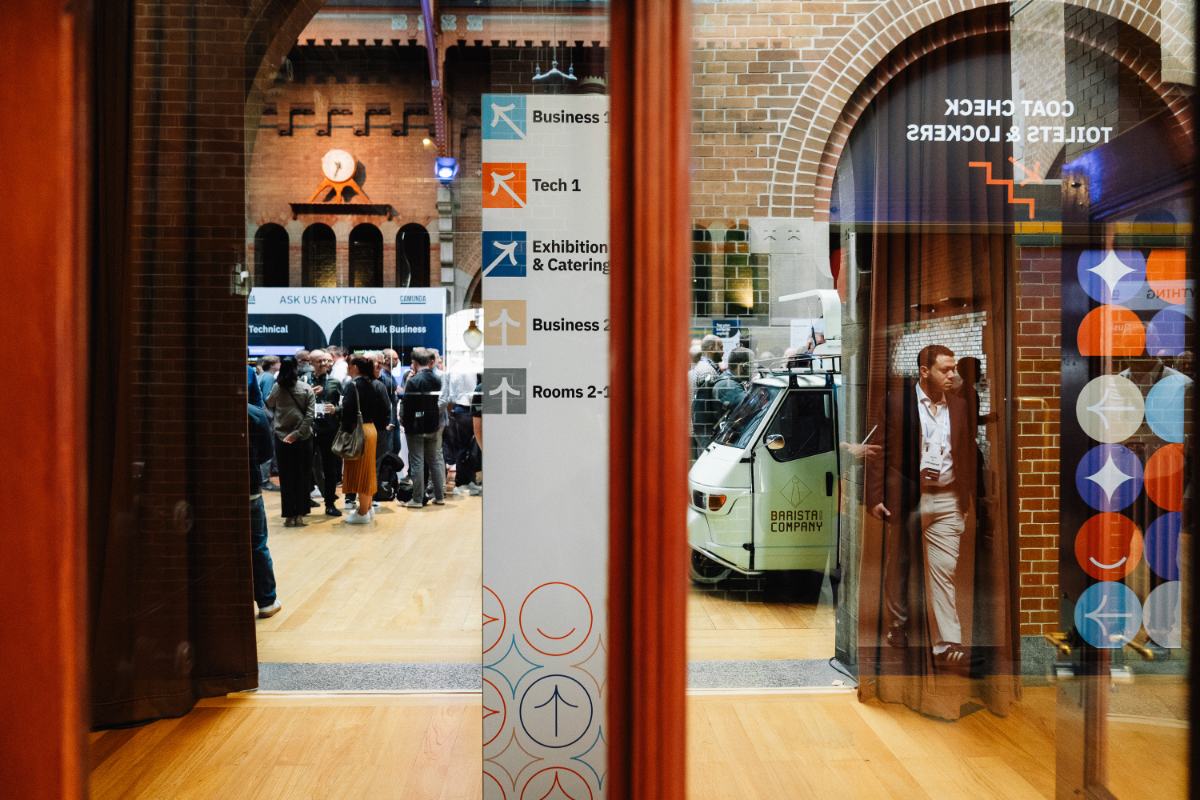
CamundaCon 2026: Main Hall book signing, color-coded wayfinding, and selfie wall
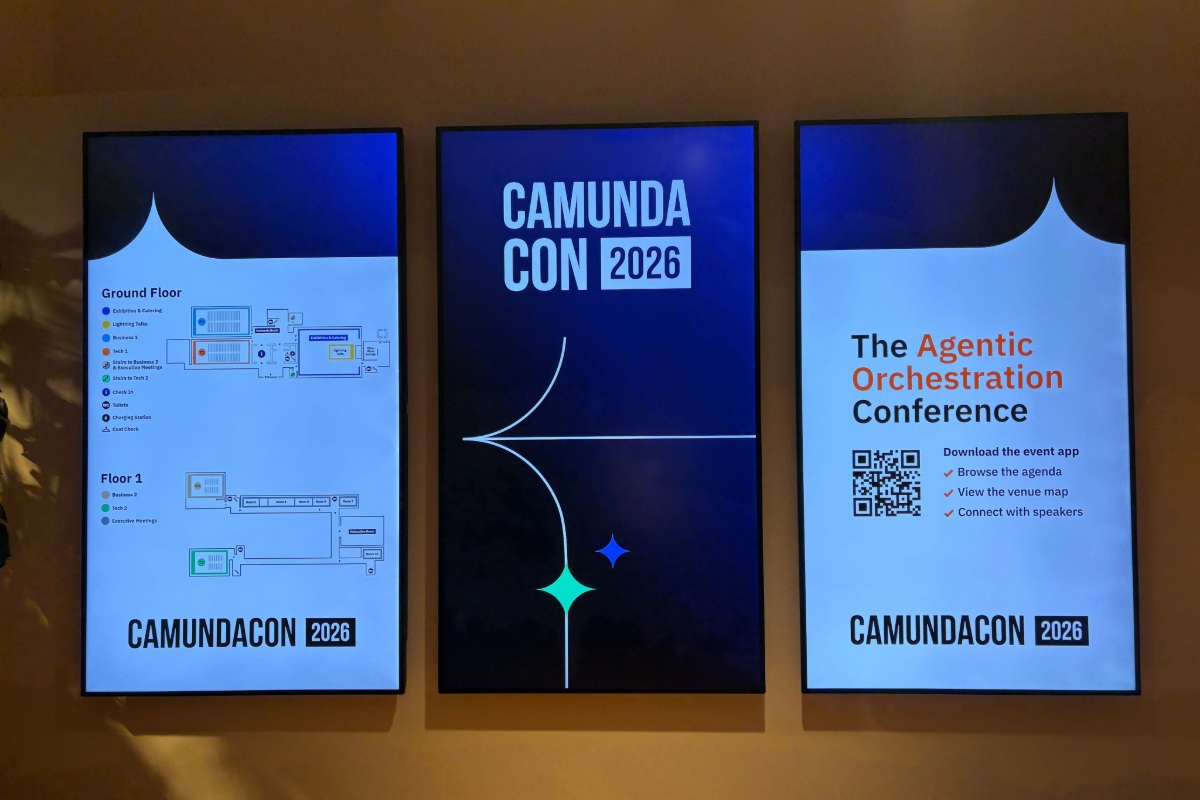
The creative concept was the most restrained the event has ever been, and that was the point. Earlier years anchored to place or season: Amsterdam's tulips, Dutch florals. This year I tied the identity to the brand narrative instead. A deep gradient from the Agentic palette, minimal geometric shapes, thin line accents, color-coded stages and wayfinding. It was the closest the event brand has ever sat to the core Camunda brand. Restraint is a confidence signal. You reach for decoration when the idea is not carrying the room.
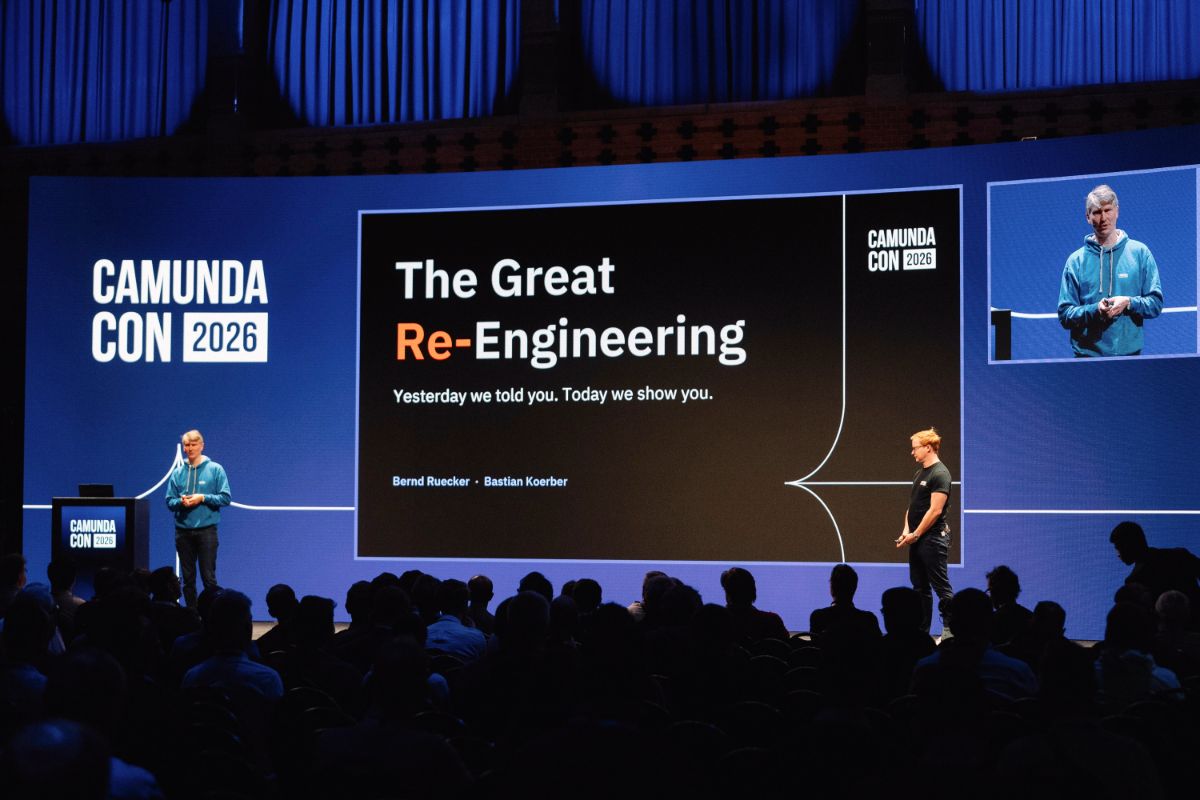
The event also carried more than a brand. It launched ProcessOS, a new product category, alongside The Great Re-Engineering, an industry narrative about re-engineering processes built for a world without AI, and doubled as the backdrop for Camunda's AI-native website relaunch, shipped mid-event. My work was the environment all of that landed in: keynote storytelling, main stage, the streaming look, the onsite AMA booth. AI sped up briefing and gave keynote slides a starting point. Finished visual output still needs a human in the loop.
Outcome: CamundaCon 2026
The 2026 story is not size. It is intent, audience quality, and a launch that landed. Three numbers carry it:
attendance rate
Registrants did not just sign up, they showed up.
active customers
Nearly half the room was the audience the launch needed to reach.
LinkedIn posts named ProcessOS
A new narrative shared in the audience's own words.
The brand in the room: CamundaCon 2026.
What this chapter proved: a creative leader is defined as much by what they do not touch as by what they do. I did not produce the signage, the looping slides, the onsite video, or the wayfinding. I designed the system that produced them and held the brand decisions that kept them coherent.
Tension and resolution
Late decisions and incomplete briefs are structural to fast-moving event production, not exceptions. My response over five years was to build systems that absorb them: reusable templates so late requests start from a frame instead of a blank canvas, clear creative DRI ownership set early to cut review cycles, and a structured debrief after every event so each year starts from a stronger foundation than the last. The production got sharper as the events scaled. That is what designed systems do.
The connecting theme across five years
Every CamundaCon was a testing ground. The strongest ideas from each event, the colors, the illustration styles, the photography-first shift, the move toward brand-native restraint, were evaluated and folded back into the core Camunda brand system. That makes the event more than an annual milestone. It is the engine the brand evolves through.
Two things compounded over five years.
- The brand got durable: Five guideline versions, a portable system, and a three-stream production model. It stopped depending on any single pair of hands.
- The role climbed: From contributing production, to owning the brand, to directing a team, to designing the system that multiple teams produce inside of.
The proof of both arrived the two times I was not there. The brand kept shipping through my extended leave in late 2024. The 2026 venue print run shipped while I was in a lava field in Iceland. Good creative infrastructure is what is still working when the person who built it is somewhere else.
Five years. Eight events. The brand held every time. What changed was who was holding it, and that was the point.
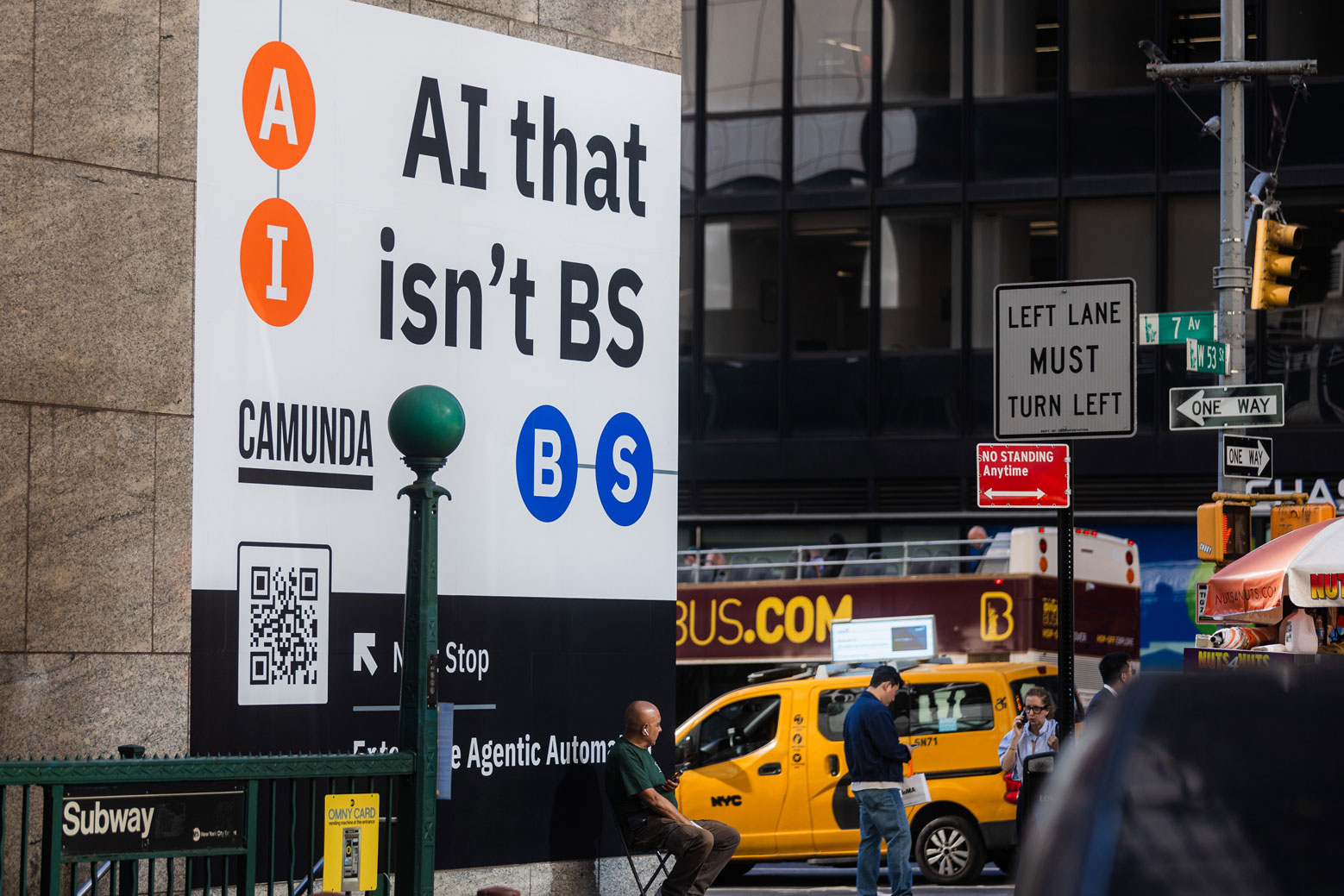
Five years. Eight events. 1,000+ in person. The brand held every time. Even as a NYC billboard blocks away from Times Square.